
NAVRUZ 2026
Celebrating, connecting, and preserving Tajik culture
in the United Kingdom.
Our platform promotes Tajik events across the UK, from community lead celebrations to official cultural national programmes supported by the Embassy of Tajikistan.
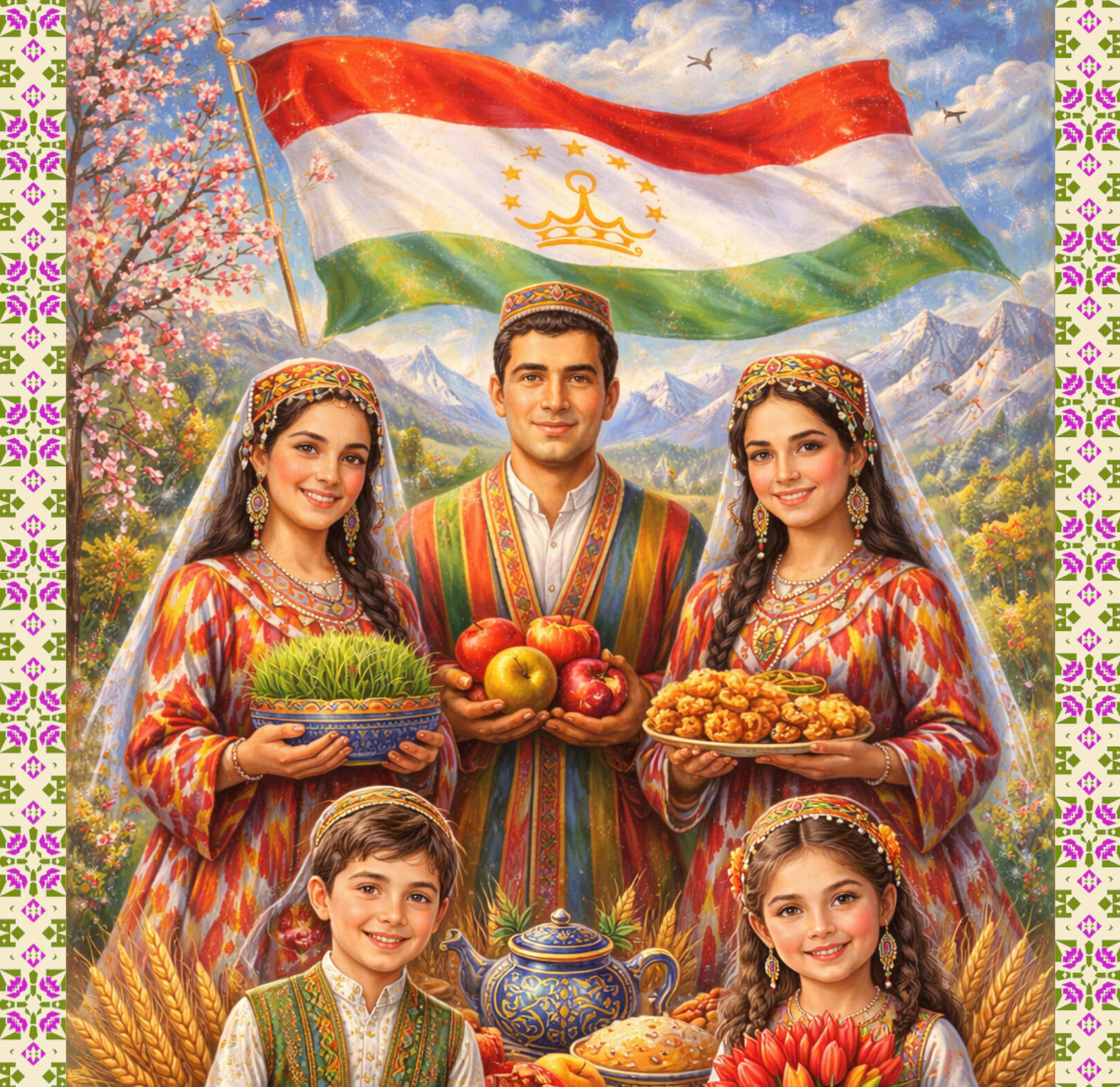
We celebrate our rich heritage, traditional values, and strong family bonds—bringing communities together while preserving the traditions that define who we are.
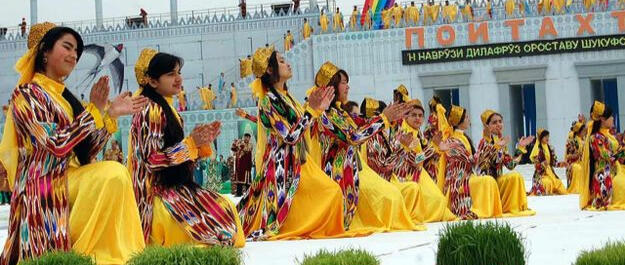


Events
This page showcases upcoming Tajik cultural events in the United Kingdom, including both private initiatives and embassy-supported programmes. Our events aim to preserve heritage, strengthen community ties, and promote Tajik culture abroad.

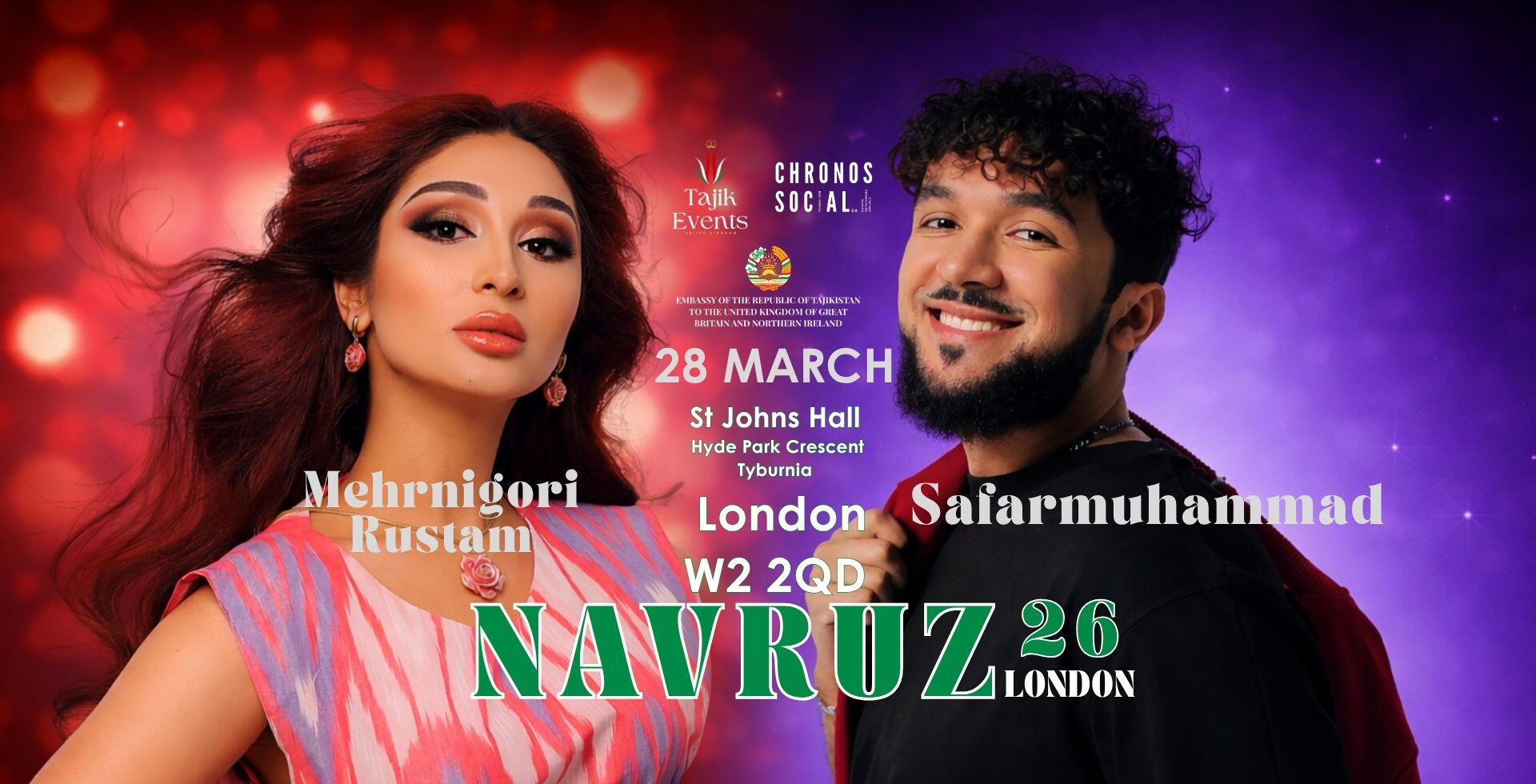
Navruz 2026

We warmly invite you to an enchanting evening to celebrate Navruz, the ancient and cherished New Year festival that welcomes spring.Date: 28 March 2026
Time: from 14:00 to 17:00Venue: St Johns Hyde Park, Hyde Park Cres, Tyburnia, London W2 2QD
Full details of the event are provided below
We warmly invite you to an enchanting evening to celebrate Navruz, the ancient and cherished New Year festival that welcomes spring and symbolizes new beginnings, hope, and harmony among people.
Celebration of Navruz – A Timeless Festival of Renewal, Culture, and Unity
Join us for a vibrant program filled with:
– A distinguished special guest performance Mehrnigori Rustam and Safarmuhammad
– Colourful national dances
– A cultural exhibition with crafts, textiles, and symbolic displays
– A children’s play area full of fun and activities
– Traditional cuisine
Tickets are limited and selling fast – reserve yours today!

Бо камоли эҳтиром, Шуморо ба шоми пурҷилои Наврузӣ даъват менамоем – ҷашне, ки омадани баҳорро истиқбол гирифта, рамзи умед, навсозӣ ва дустиву ҳамдилиро дар худ таҷассум менамояд.
Таҷлили Навруз – Иди бостонӣ ва рамзи эҳё, фарҳанг ва ваҳдат
Сана: 28 Март 2026 Соат: аз 14:00 to 17:00
Ҷойи баргузорӣ: St Johns Hyde Park, Hyde Park Cres, Tyburnia, Лондон, W2 2QD
Барномаи пурмазмуни шом иборат аст аз:
– Баромади ҳунарии овозхони шинохтаи тоҷик - Мехринигори Рустам и Safarmuhammad
– Рақсҳои зебои миллӣ
– Гушаҳои фарҳангӣ иборат аз ҳунарҳои дастӣ ва ороишоти рамзӣ
– Гуша барои кудакон бо бозиҳо ва шодӣ
- Таомҳои миллӣ
Ҷойҳо маҳдуданд! Чиптаҳо фаъолона фурухта мешаванд – пешакӣ дастрас кунед!


Мы приглашаем вас на торжественный вечер в честь праздника Навруз – древнего и почитаемого праздника весны и нового года, который символизирует обновление природы, надежду и единство людей.
Празднование Навруза – Древний праздник весны, культуры и единства
Дата: 28 Марта 2026 г. Время: с 14:00 по 17:00
Место: St Johns Hyde Park, Hyde Park Cres, Tyburnia, Лондон, W2 2QD
В программе вечера:
– Выступление почётного специального гостей - Мехринигори Рустам и Safarmuhammad
– Яркие национальные танцы
– Культурная выставка с декоративно-прикладным искусством и традиционным убранством
– Игровая зона для детей, полная веселья и радости
– Угощение национальной кухни
Количество мест ограничено! Билеты продаются быстро – успейте приобрести!

Navruz 2026

ABOUT US
Our platform brings the Tajik community in the UK together by celebrating culture, heritage, and traditional values. We support and promote a wide range of Tajik events, from family gatherings to official cultural programmes. By creating connections and preserving traditions, we help strengthen family bonds and keep our cultural identity alive abroad.

Contact us
We welcome enquiries about Tajik cultural events, partnerships, and sponsorship opportunities in the United Kingdom. Whether you are organising an event, interested in sponsoring cultural initiatives, or seeking collaboration, please contact us. Together, we can create, connect, and preserve Tajik culture and heritage in the UK.
Thank you
Thank you for your interest in supporting Tajik culture and community in the UK.

Our supporters and partners

Embassy of Tajikistan to the United Kingdom of Great Britain and Northern Ireland

Chronos Social Production


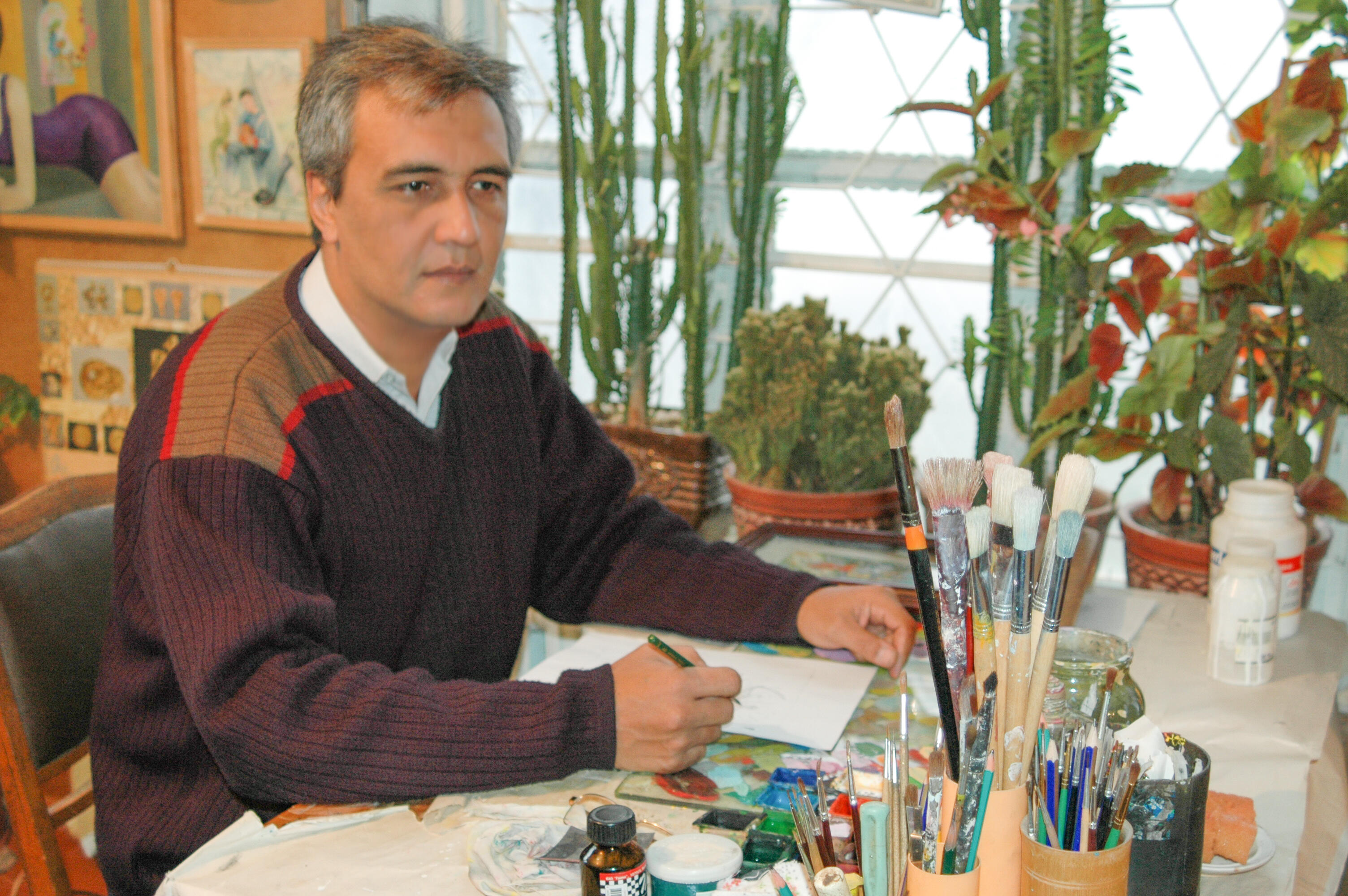
Olim Kamolzoda
Olim Kamolzoda is the Honoured Artist of the Republic of Tajikistan, a Member of the Union of Artists of the Republic of Tajikistan, and a Specialist of the Miniature Art. Studying the specifics of the work of Kamoliddin Bekhzod, an outstanding Persian-Tajik miniaturist of the 14th century, Olim Kamolzoda developed his own miniature art technique. Miniature art, mastered by Persian-Tajik artists since the Middle Ages, was rarely practiced in the modern Republic of Tajikistan. Thanks to the efforts of Kamolzoda, including the creation of the Mino Art Centre-Club UNESCO, Tajik miniatures are presented to the public nowadays.
In 2017, on the initiative of the Embassy of the Republic of Tajikistan in the United Kingdom, five of Kamolzoda’s works of art were transferred to the British Museum’s Islamic Gallery for future expositions.
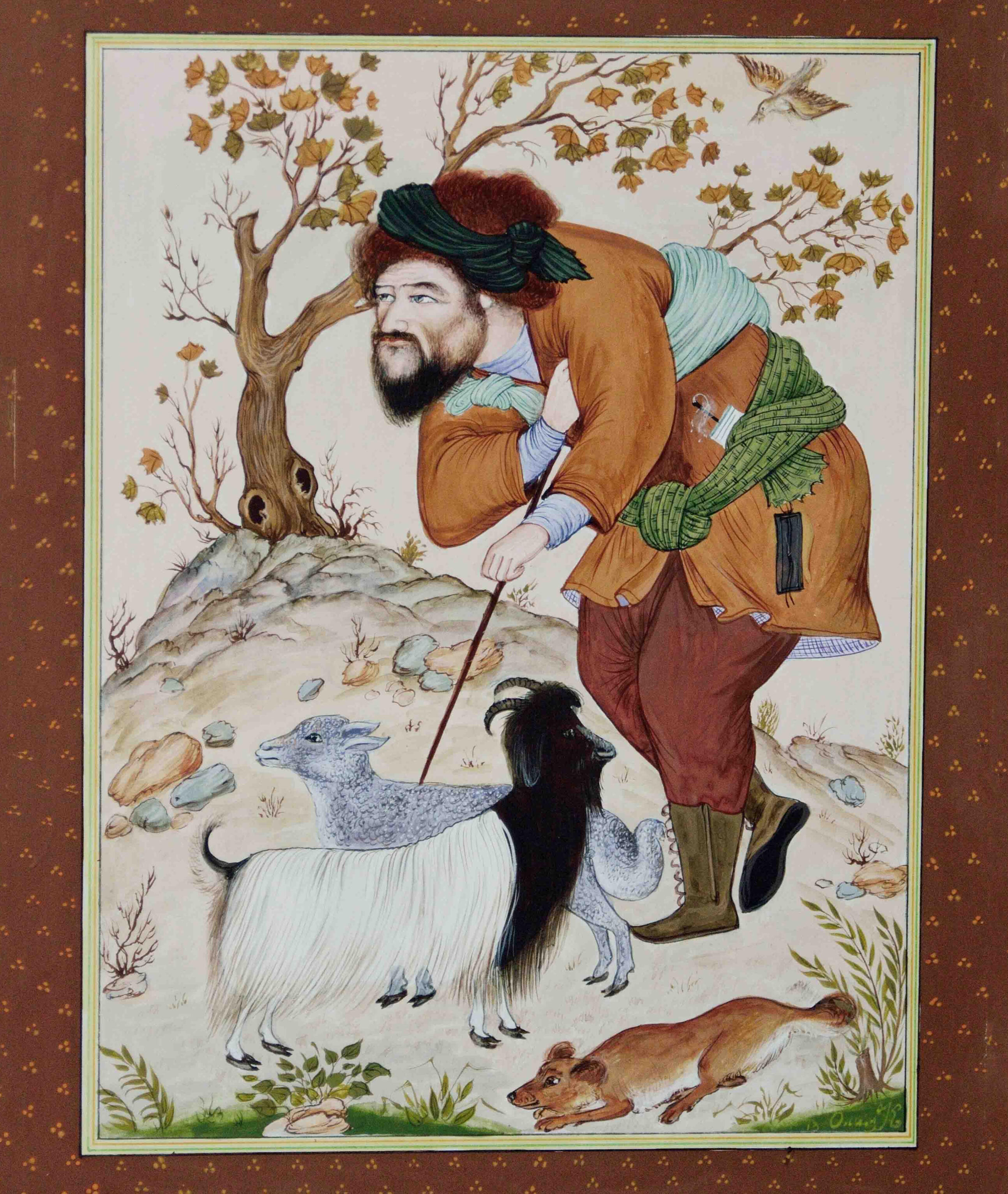
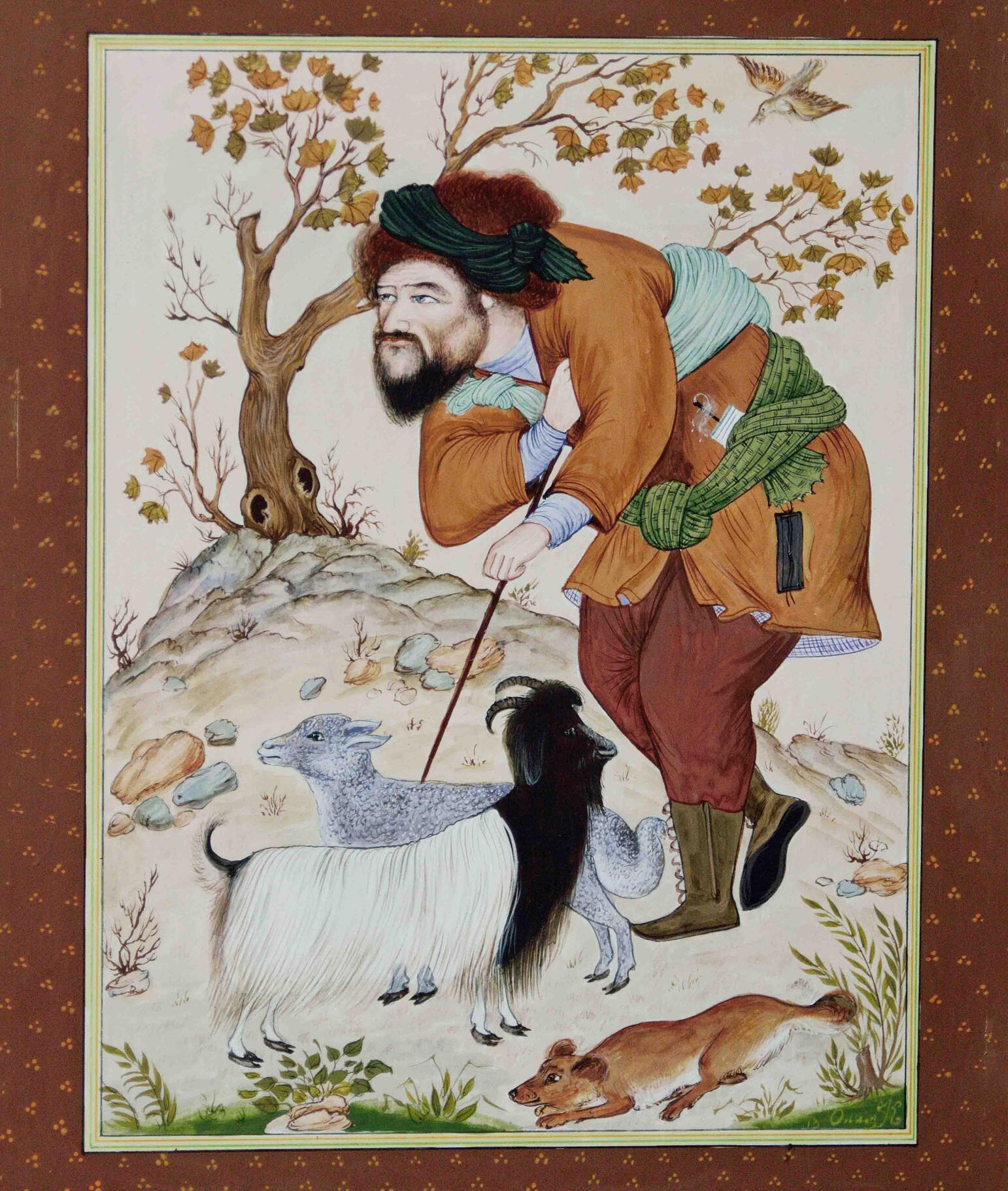
Artwork 1 - “Pastukh” – "Shepherd"
Tempera on paper, 25x20cm, 2013
Inspired by the Isfahan school of Riza Abbasi.
Exquisite miniature performance,
captivating the viewer and revealing the spiritual world of the shepherd
in the heart of nature, with a finely textured and detailed composition.
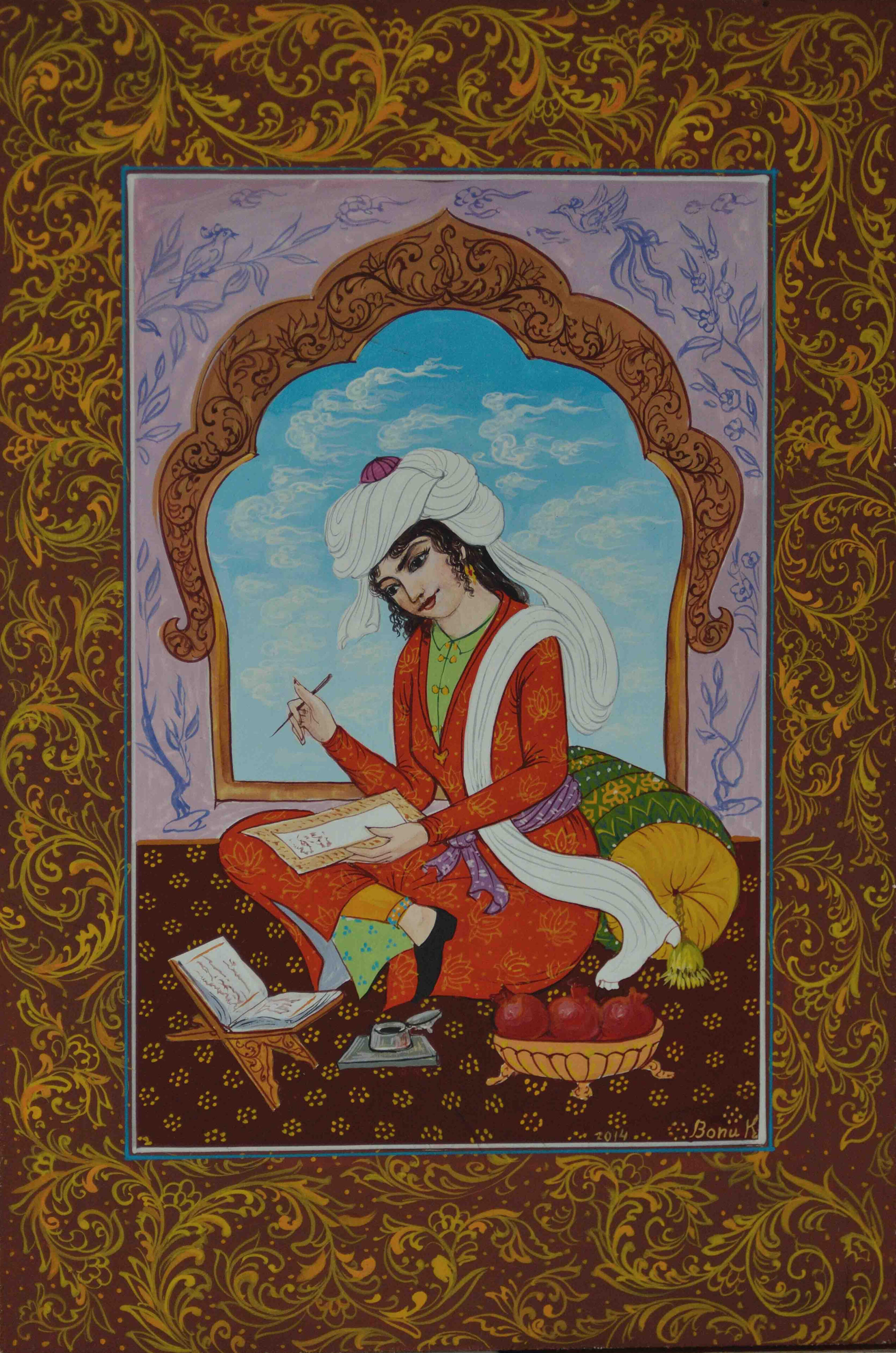
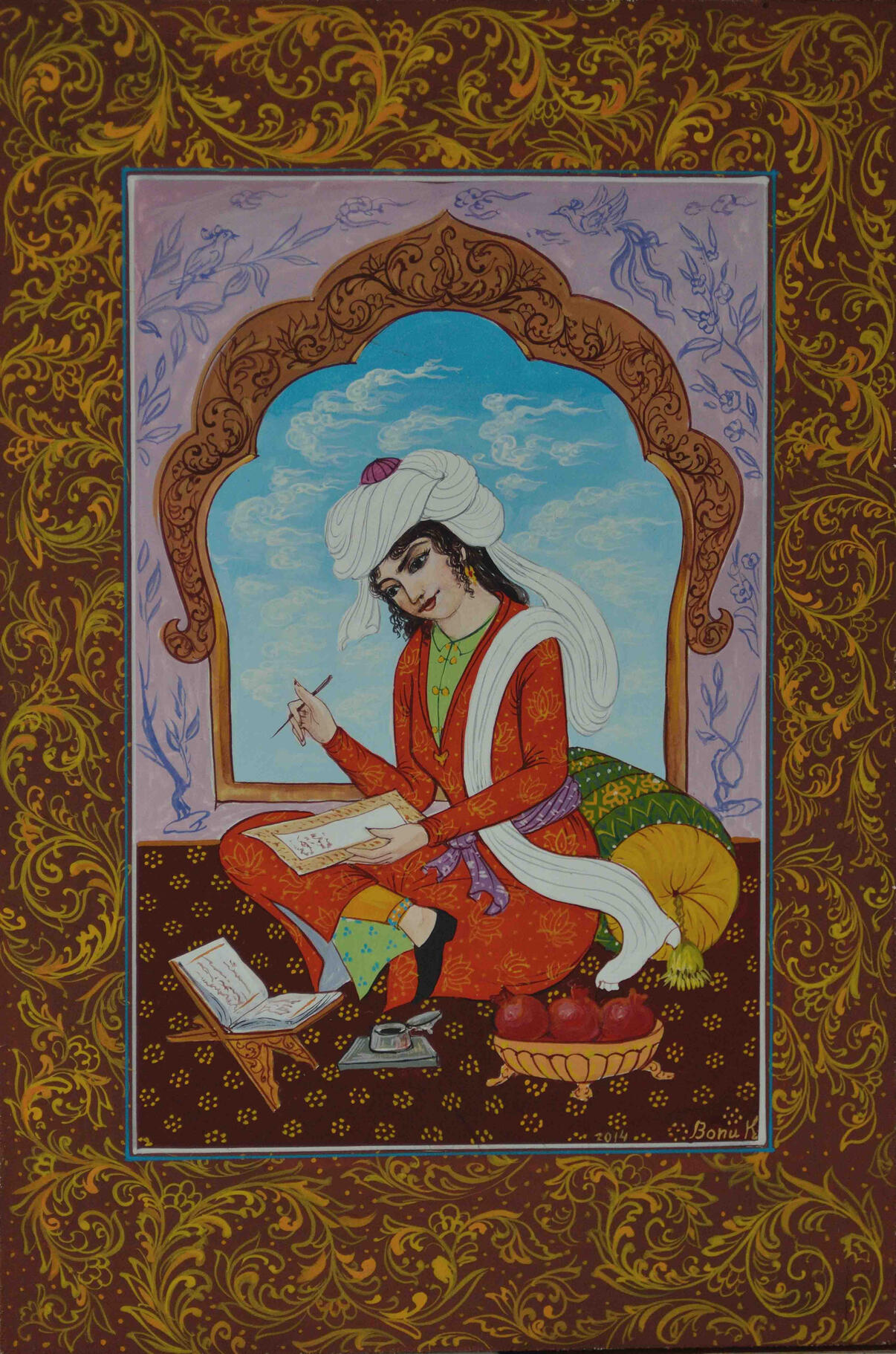
Artwork 2 - “Begim”
Tempera on paper, 30х20, 2012
The miniature embodies the timeless relevance of Tajik classical poetry and painting,
when manuscripts and book illustrations were created
with the artist’s spirit and elegance.
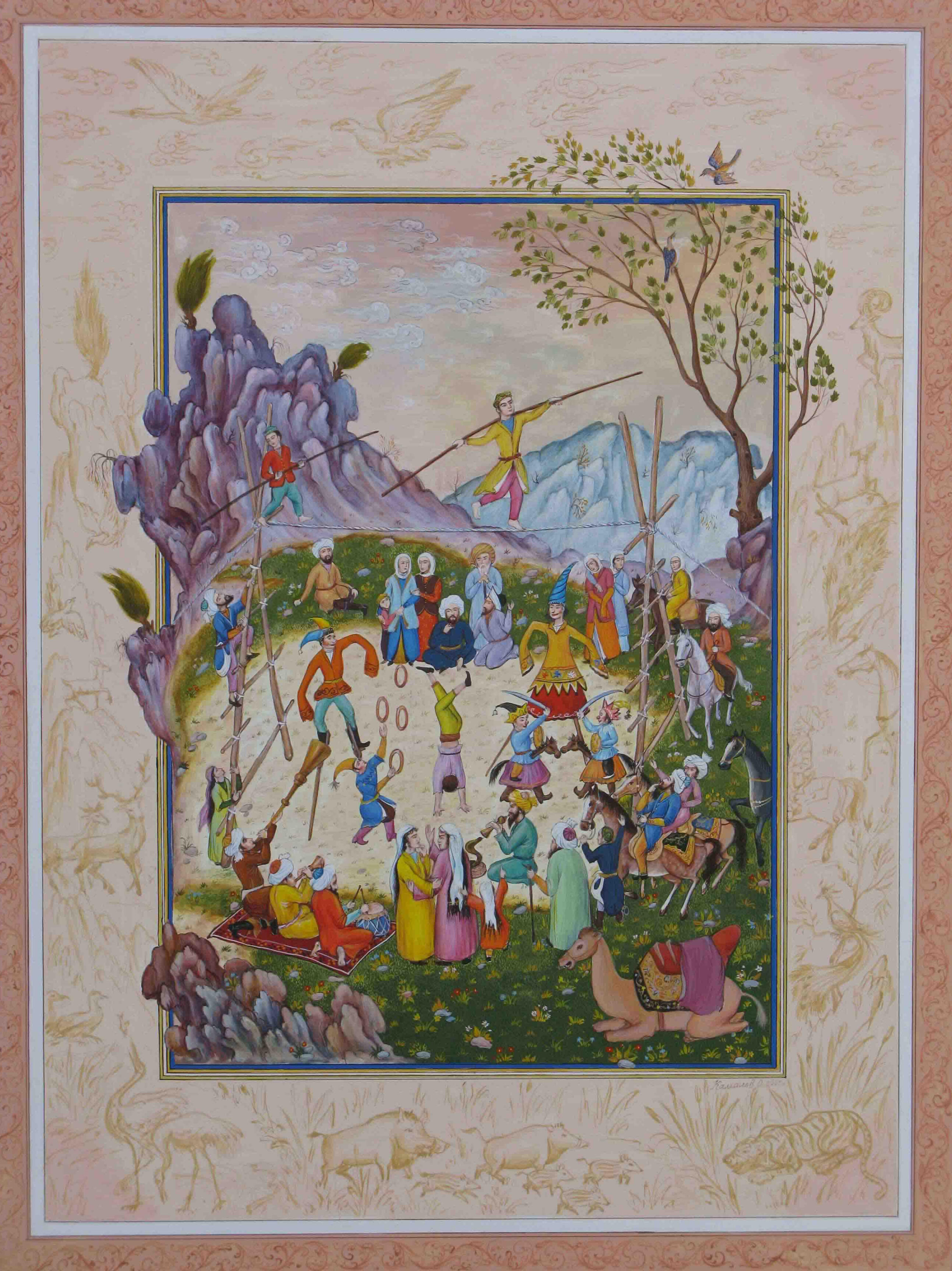
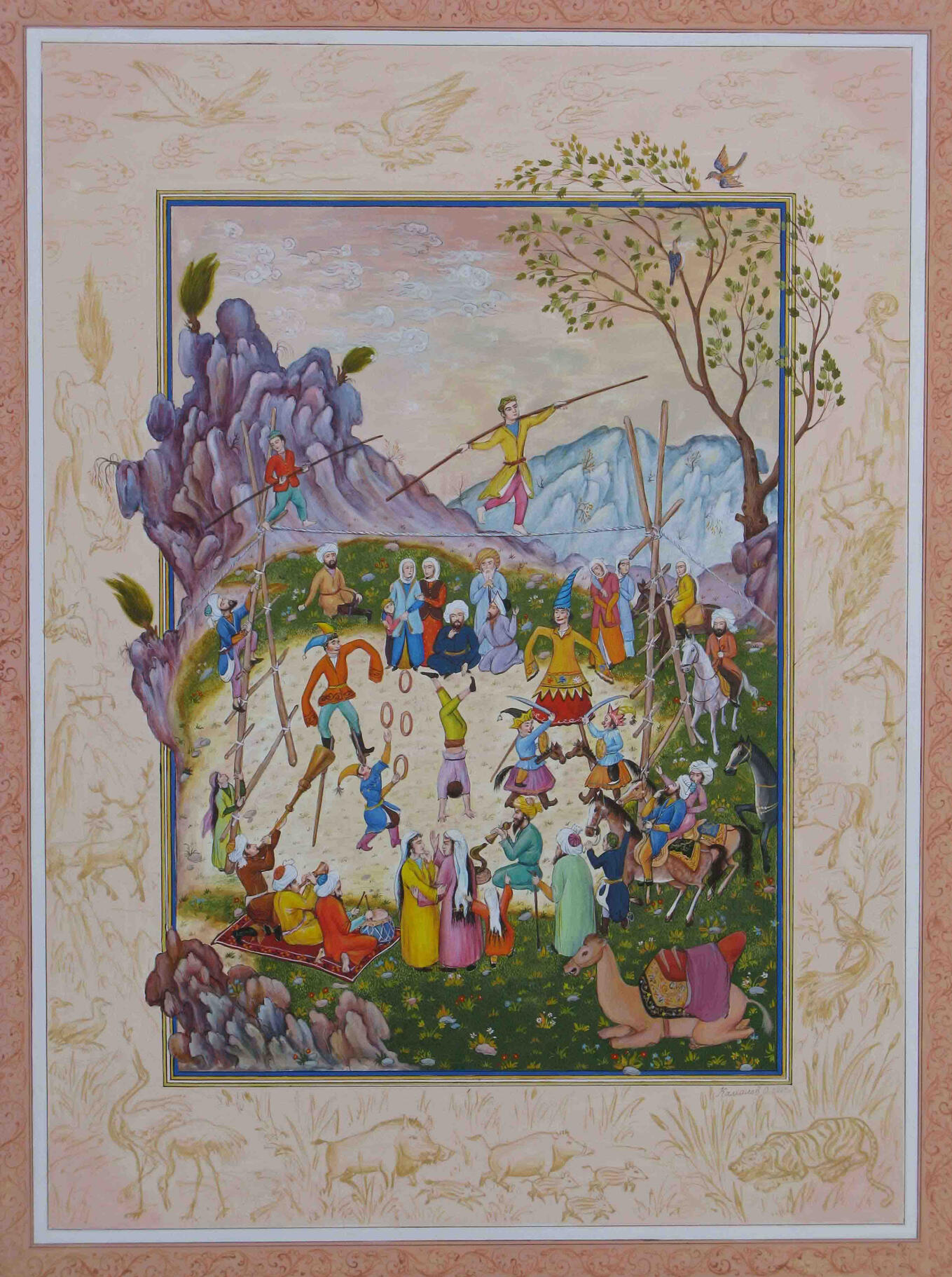
Artwork 3 - “The Rope Walker”
Canvas, Tempera on Paper, 50x70cm, 2005
Nowruz celebrations in Tajikistan are accompanied by folk traditions,
and the ancient art of the traveling circus,
which has not lost its significance in the 20th century,
showcases the skill of tightrope walkers and jesters.
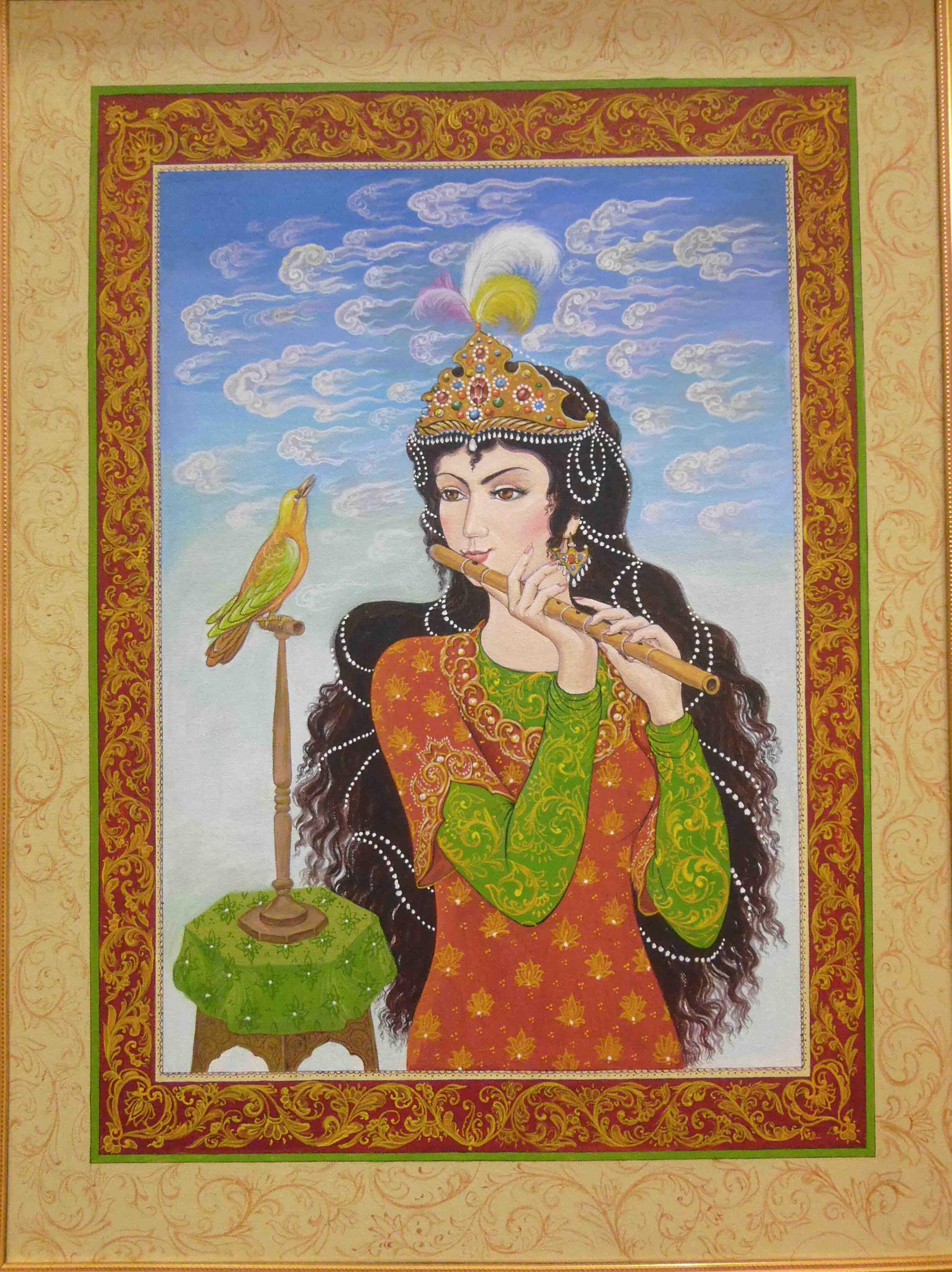
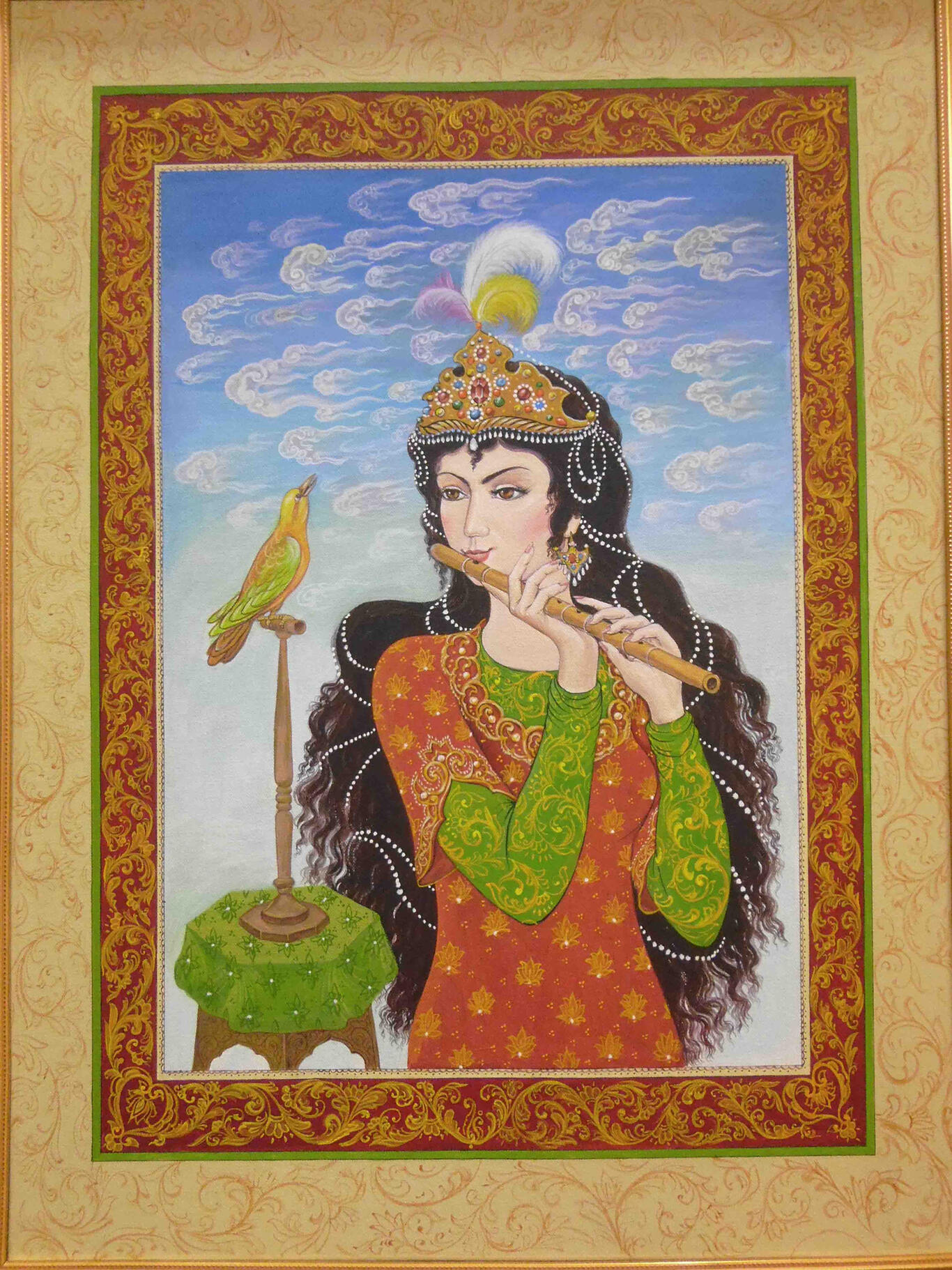
Artwork 4 - “The Flutist”
Flutist, canvas, tempera, 80х60cm, 2015
The sounds of the flute, reminiscent of a nightingale’s trills,
evoke for the artist the history of their ancestors.
The artist’s father was a folk composer,
a skilled flutist, and the first conductor of the National Orchestra of Tajikistan.
This painting was created for the opening of the artist’s solo exhibition
at the National Museum of Tajikistan.
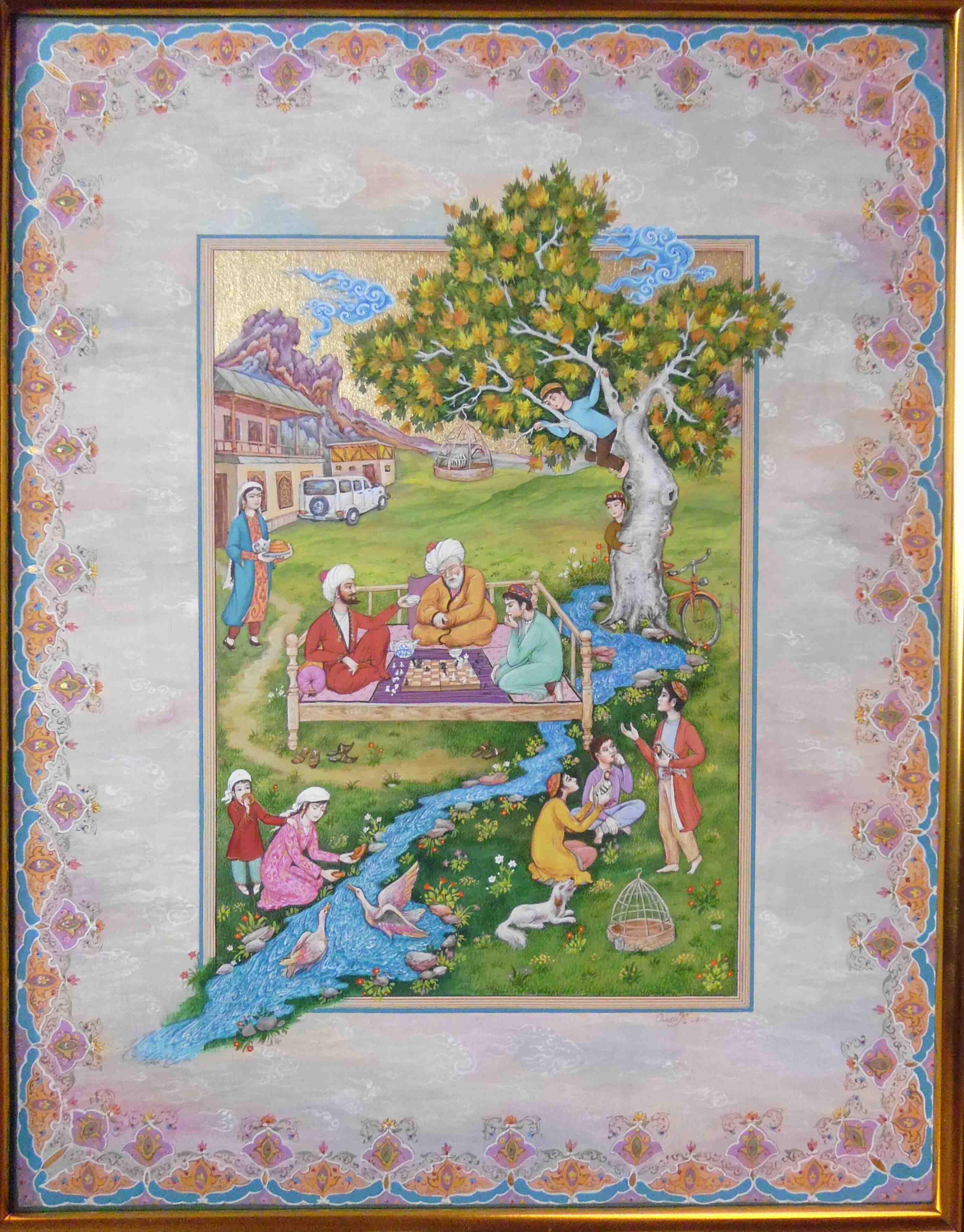
Artwork 5 - “Playing Chess” –
Tempera on canvas, 50 × 40 cm, 2014
This work reflects the rich legacy of chess in Persian culture, where the game has been celebrated for centuries as a symbol of strategy, intellect, and artistry. The work captures a player in deep concentration, echoing the centuries-old tradition of Persian masters who elevated chess into both a mental and cultural art form.

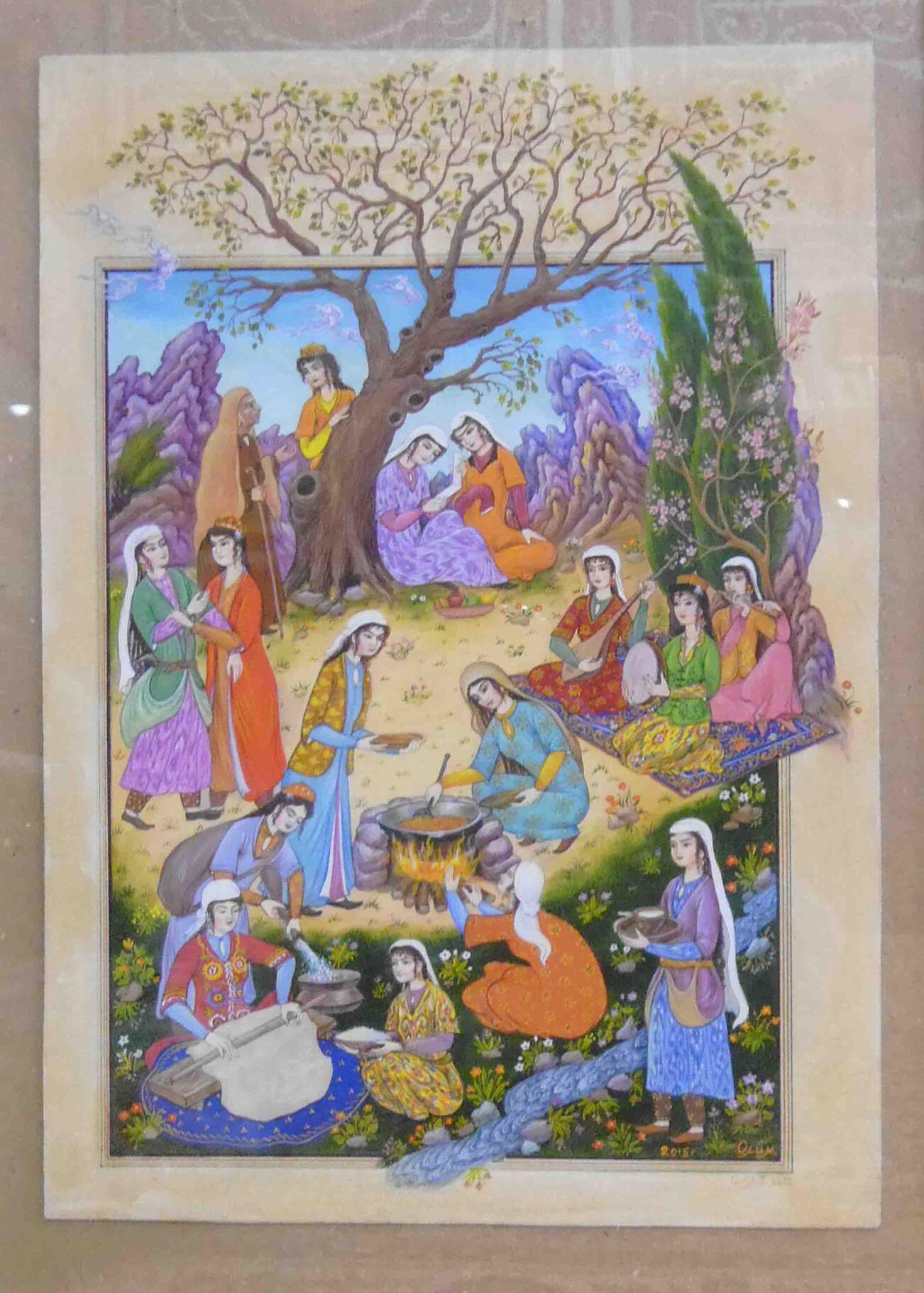
Artwork 6 - “Navruz. Preparing Sumalak”
Tempera, 50 × 35 cm, 2015
Navruz is an ancient holiday connected with the period of Zoroastrianism and is included in the UNESCO Intangible Cultural Heritage list. Elder women together with young girls take part in the traditional preparation of the spring dish sumalak. This process reflects the renewal of nature and symbolizes continuity and harmony within the family.
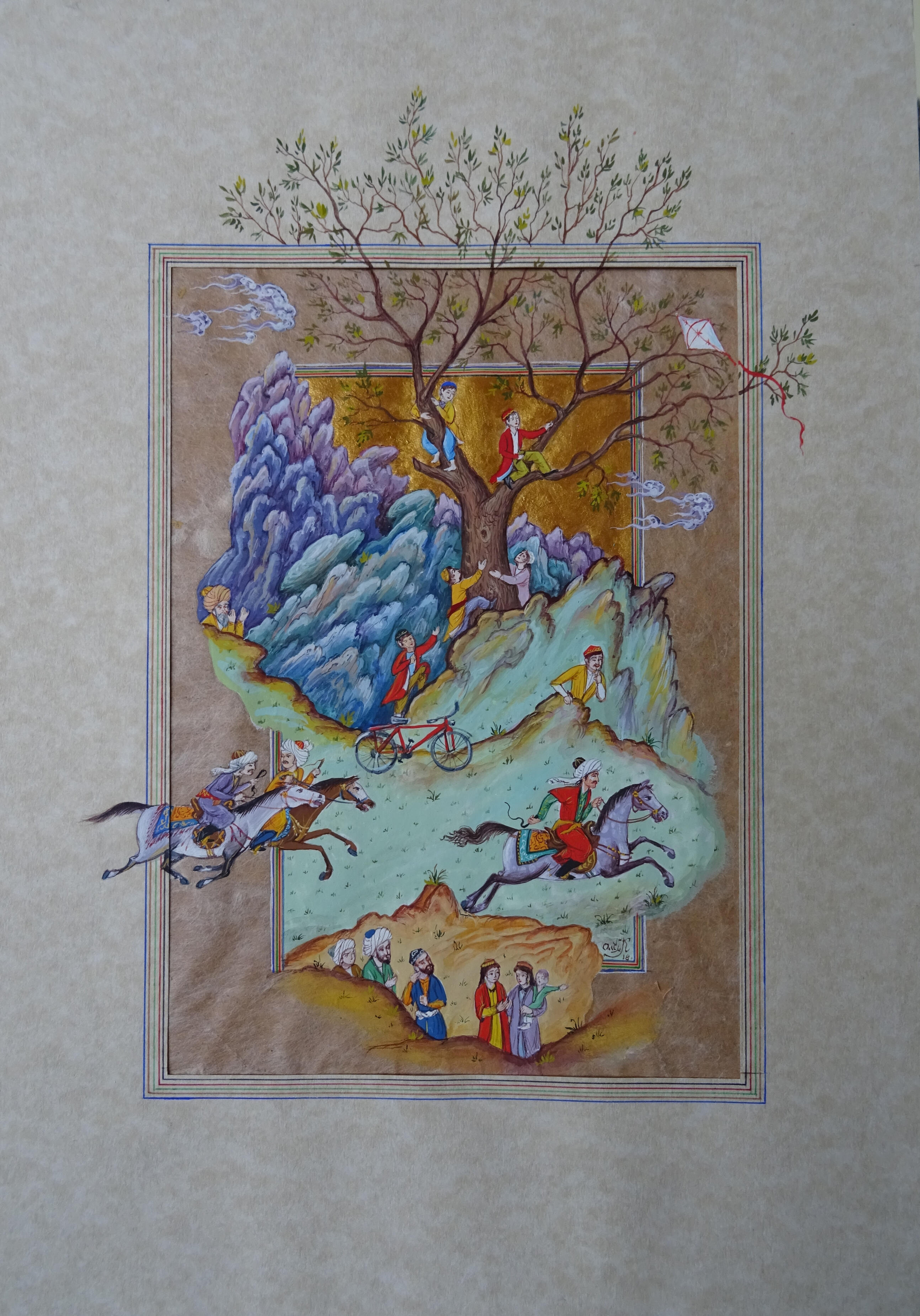
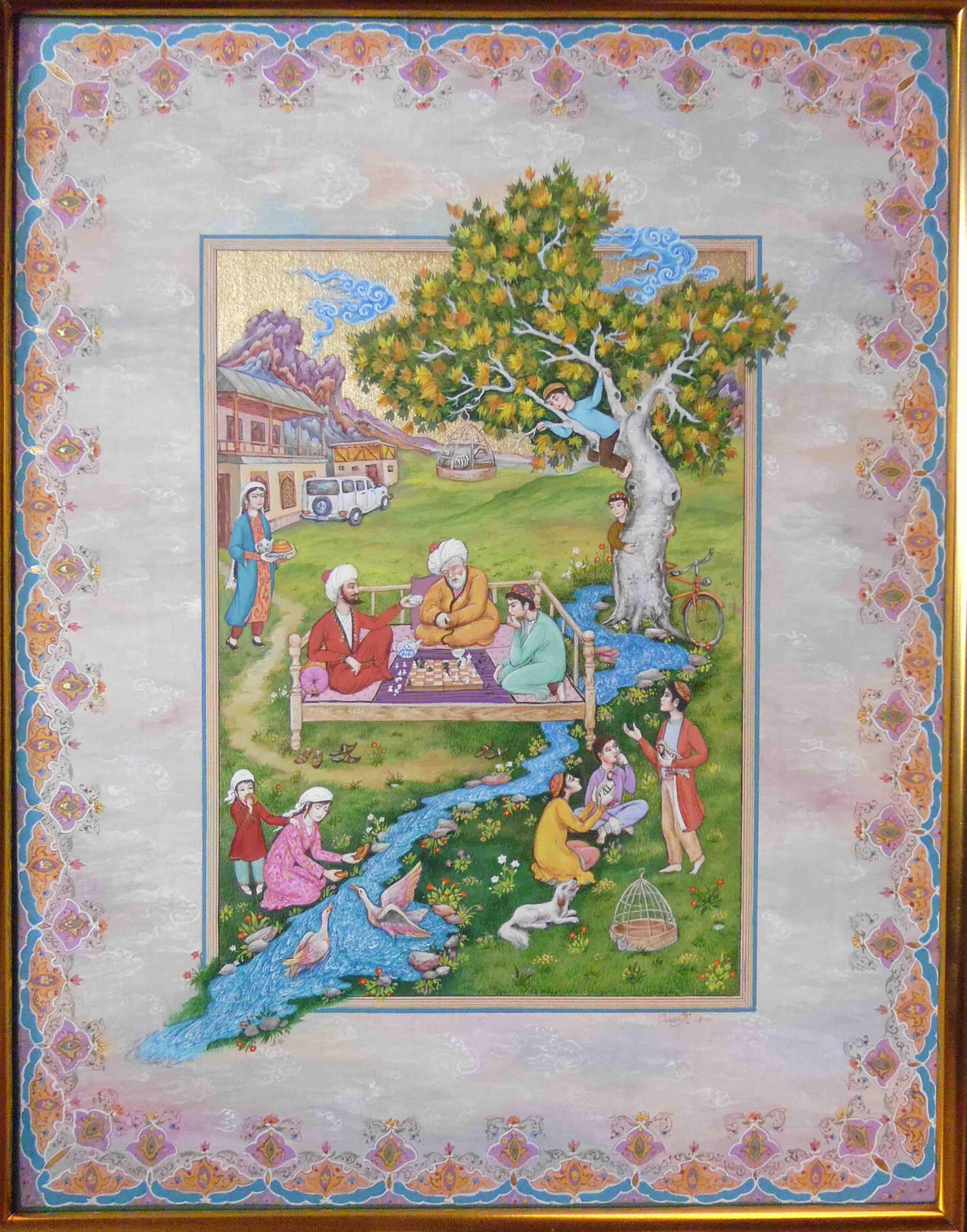
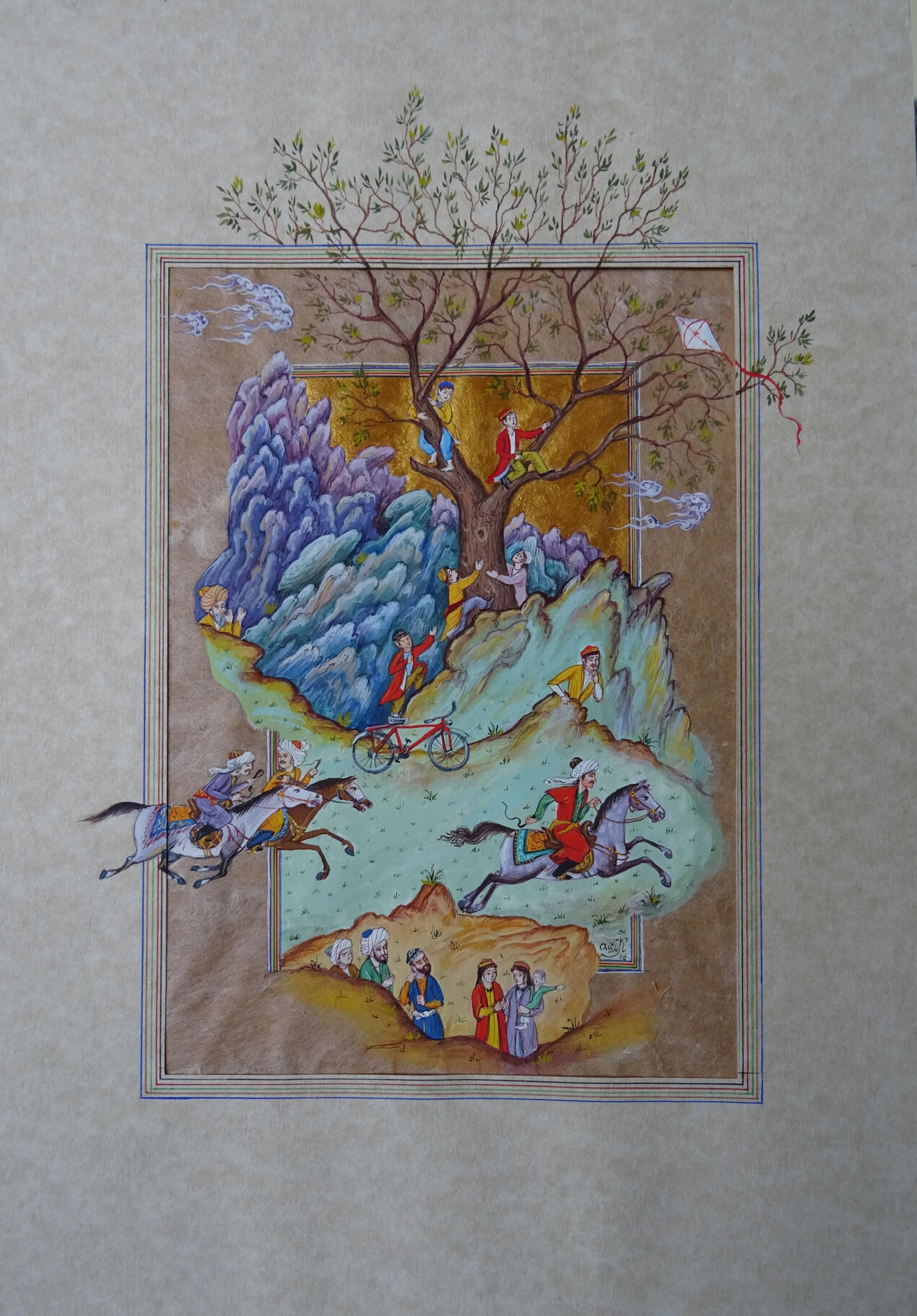
Artwork 7 - “Poyga”
Silk paper, tempera, 18 × 13 cm
The dynamic action unfolding in the scene depicts a horse race. This work is an excerpt from a larger composition presented at a festival in Tehran, where the artist received first prize at the International Miniaturists Competition in 2017. For the first time, the artist incorporates elements of modernity—such as a bicycle and new techniques—which he continues to use in his work to this day.
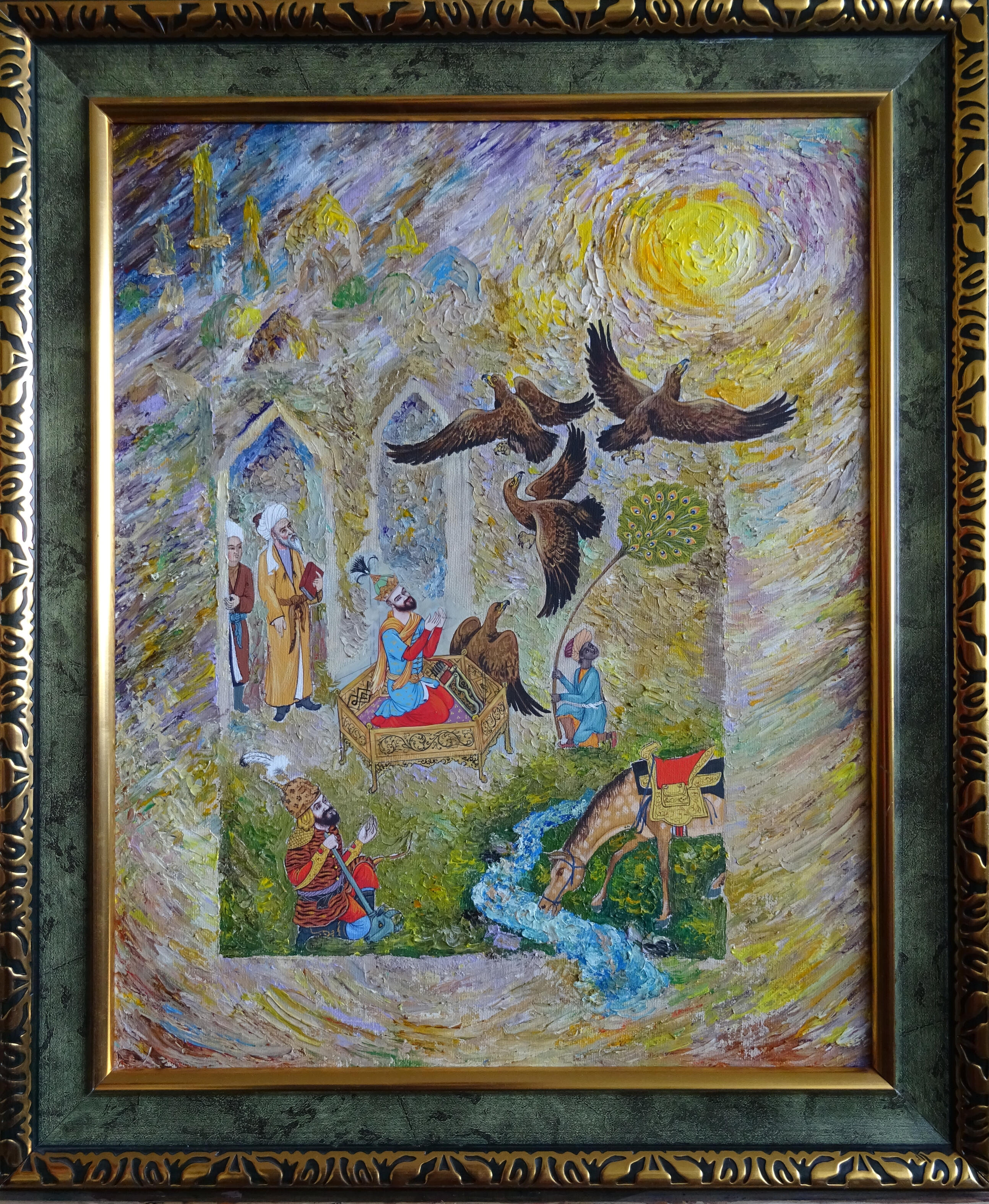
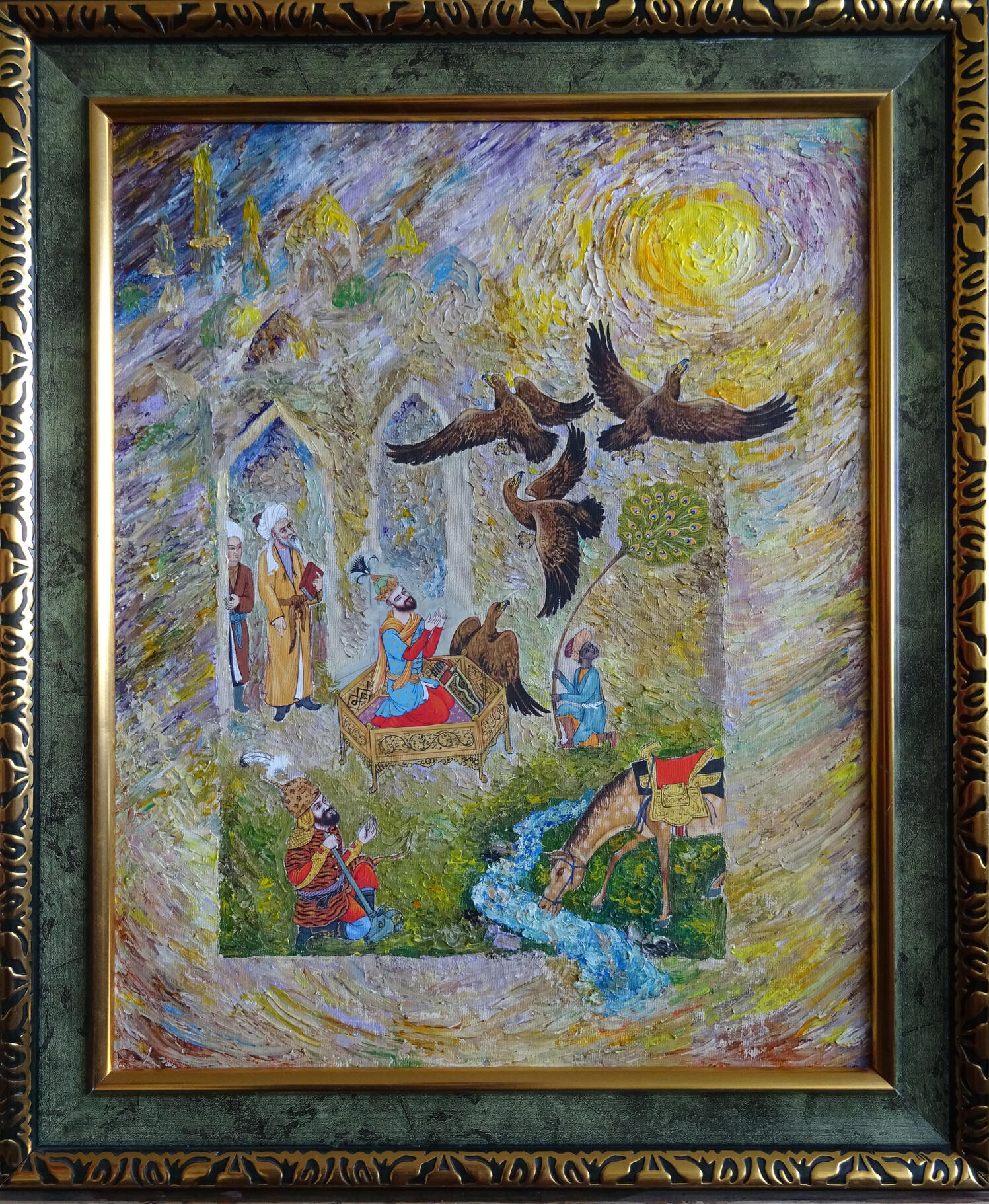
Artwork 8 - Eagles
Mixed media: oil and tempera on canvas-board, 70 × 90 cm, 2019
Series from the Shahnameh of Ferdowsi
“The Flight of Kay Kavus to the Sky”Inspired by the epic Shahnameh, this work depicts the legendary story of Shah Kay Kavus, who attempts to fly toward the heavens in his ambition to approach the divine. His experiment fails, and the hero Rustam later rescues him in the mountains, where tree branches soften his fall. The painting combines oil and tempera, reflecting the artist’s evolving approach to color, composition, and design.
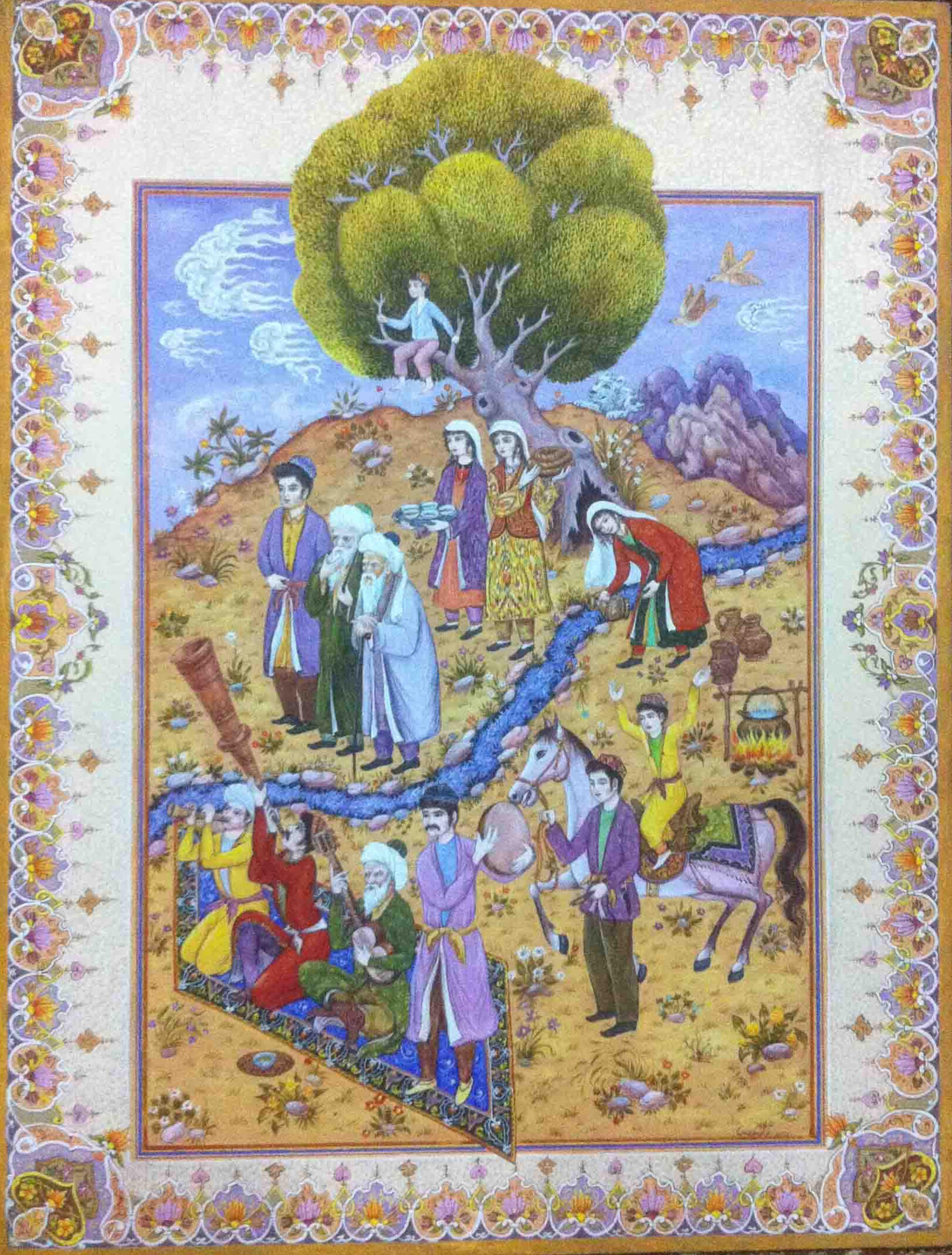
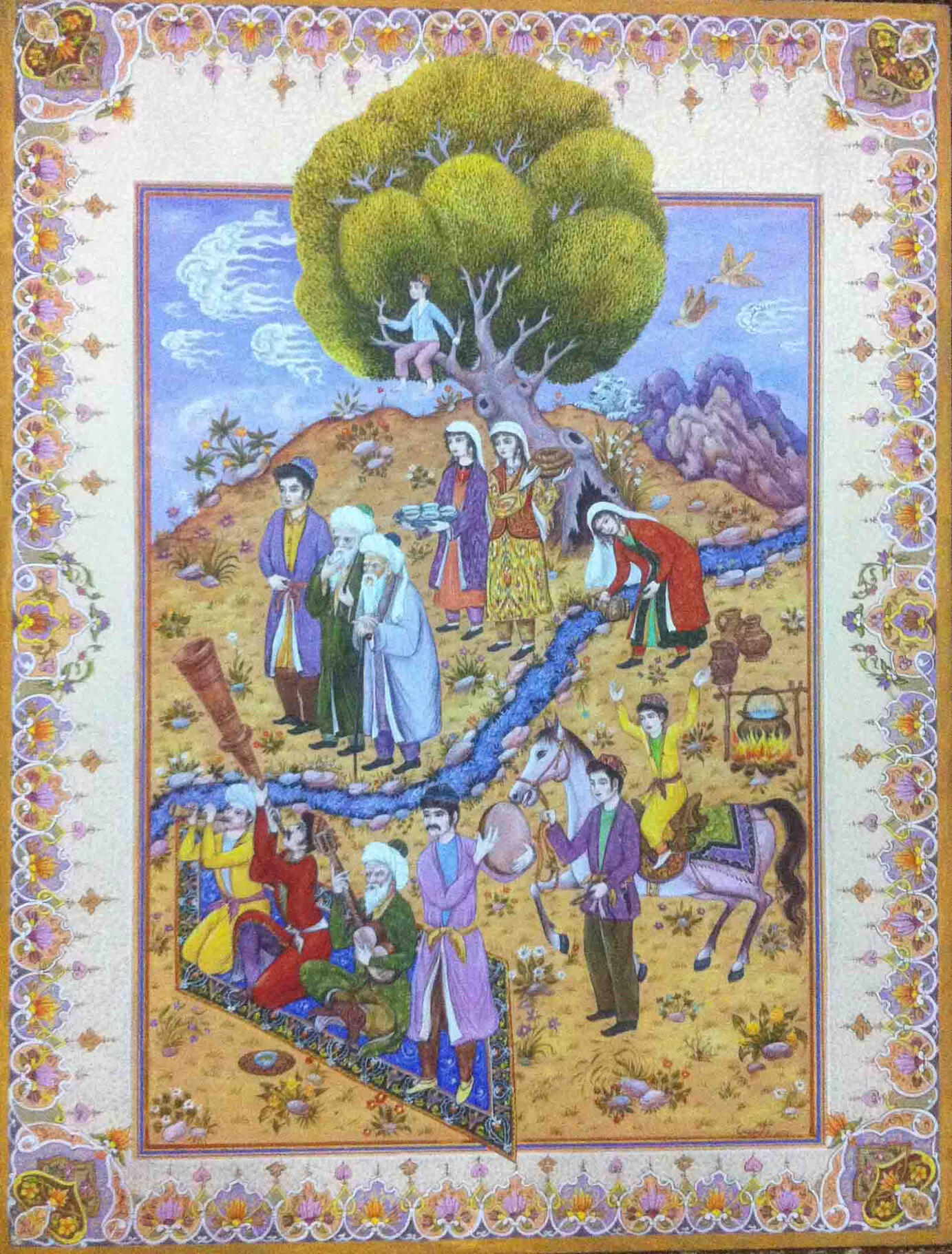
Artwork 9 - Ramadan Celebration
Tempera and watercolor, 30 × 40 cm, 2014
The painting depicts the atmosphere of Ramadan, a time of spiritual reflection, community, and celebration. Through soft colors and delicate composition, the work reflects the harmony, devotion, and shared traditions that characterize the holy month.
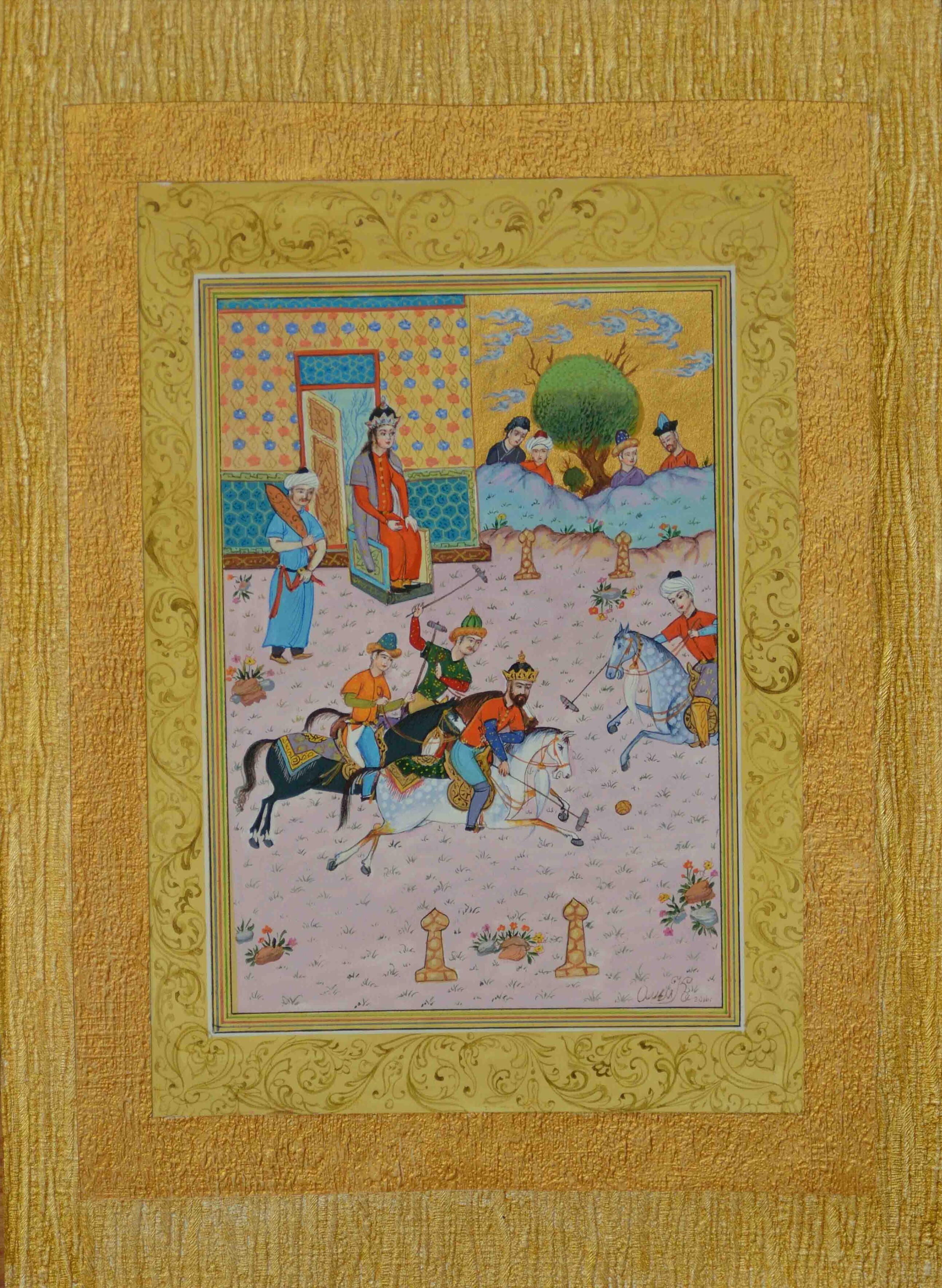
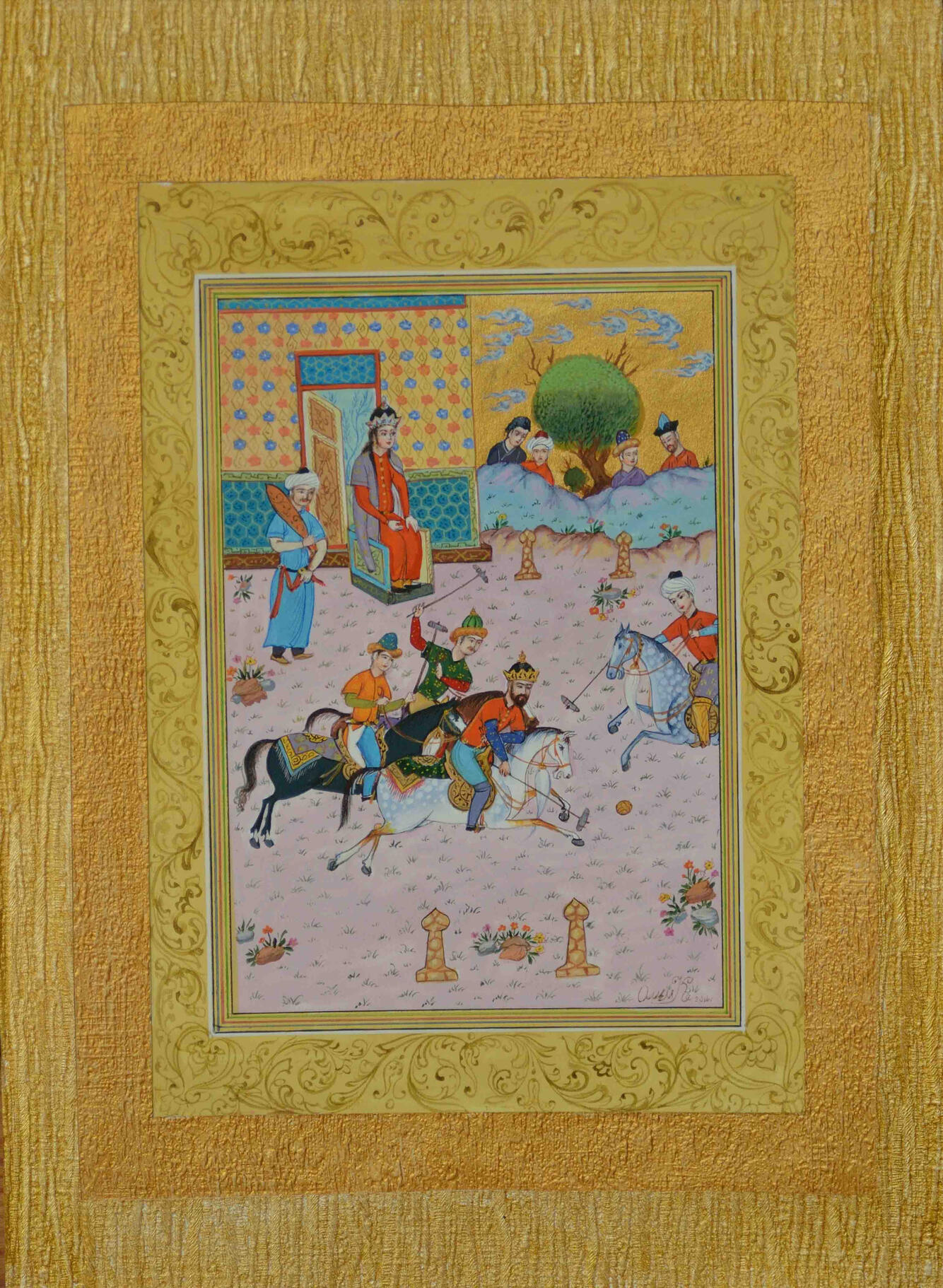
Artwork 10 - Polo
Tempera, 30 × 20 cm, 2013
This miniature captures the energy and elegance of the traditional game of polo, a sport historically associated with royal courts across Persia and Central Asia. Through rhythmic movement and refined detail, the artist conveys the dynamism of riders and horses engaged in the spirited competition.
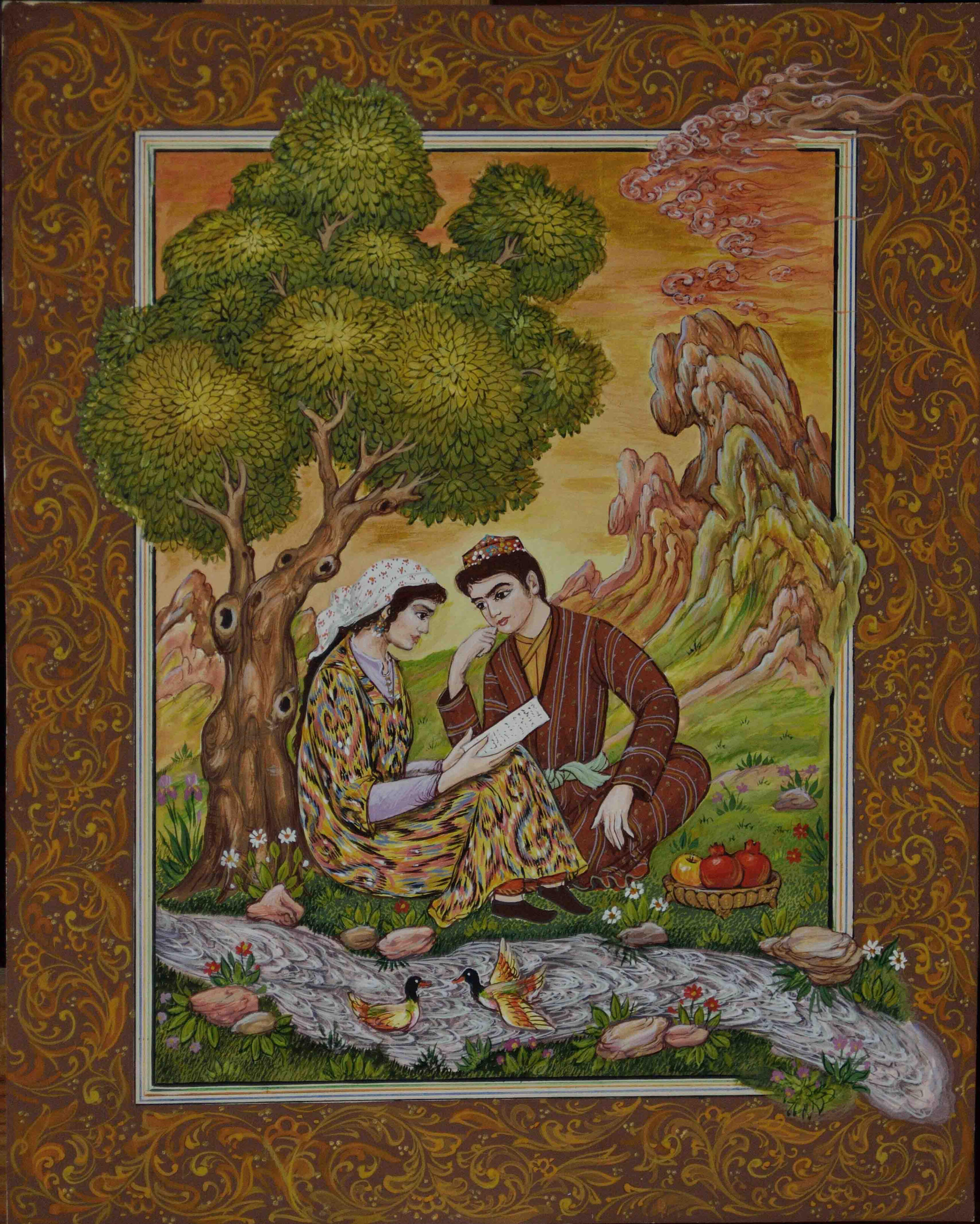
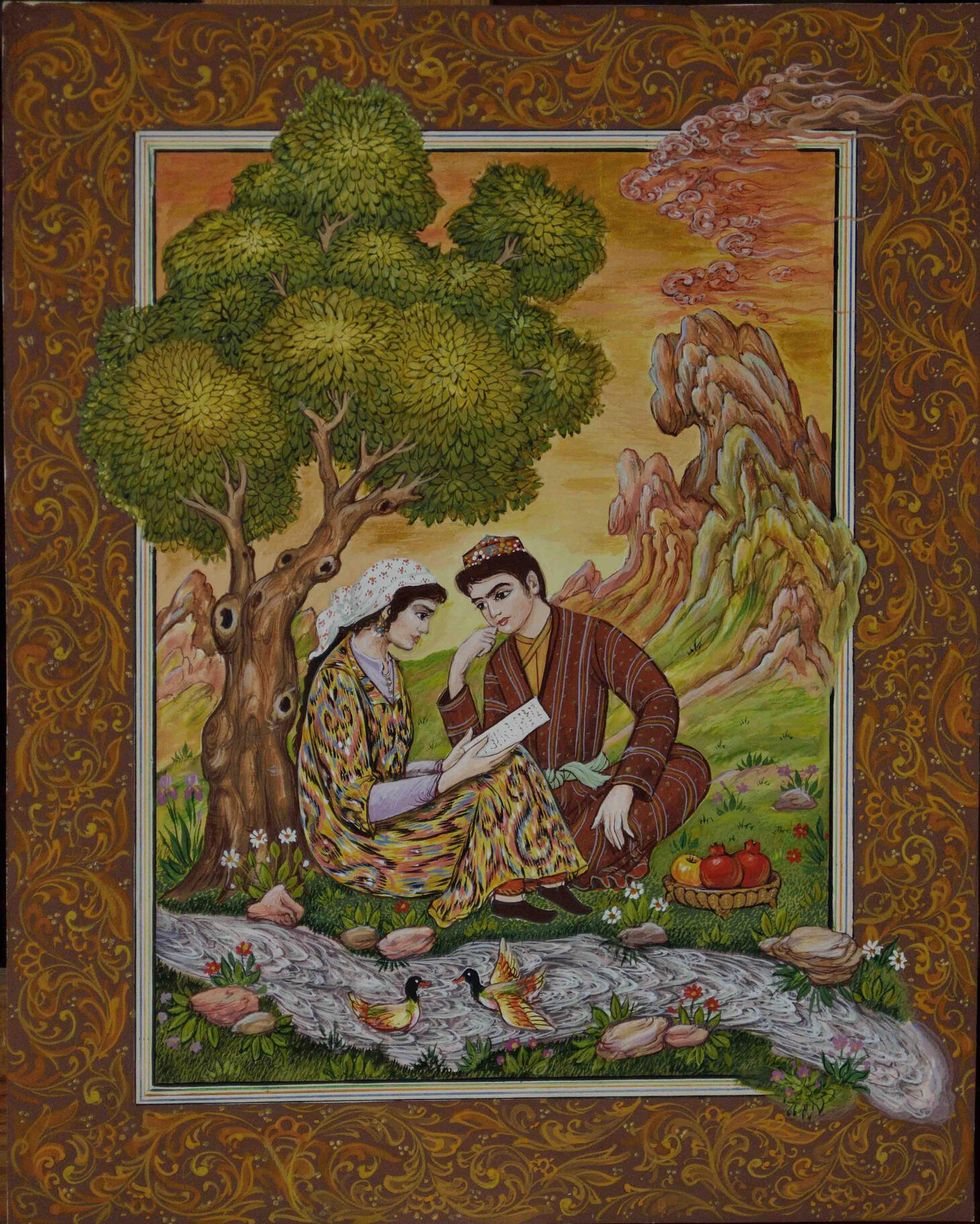
Artwork 11 - In Love
Canvas, tempera, 30 × 20 cm, 2004
A young woman sits beneath a tree, reads a book while a man nearby gazes toward her, suggesting a quiet moment of admiration and reflection. The scene evokes themes of romantic longing and poetic contemplation, echoing the traditions of classical Persian and Central Asian miniature painting where love, nature, and literature are closely intertwined.
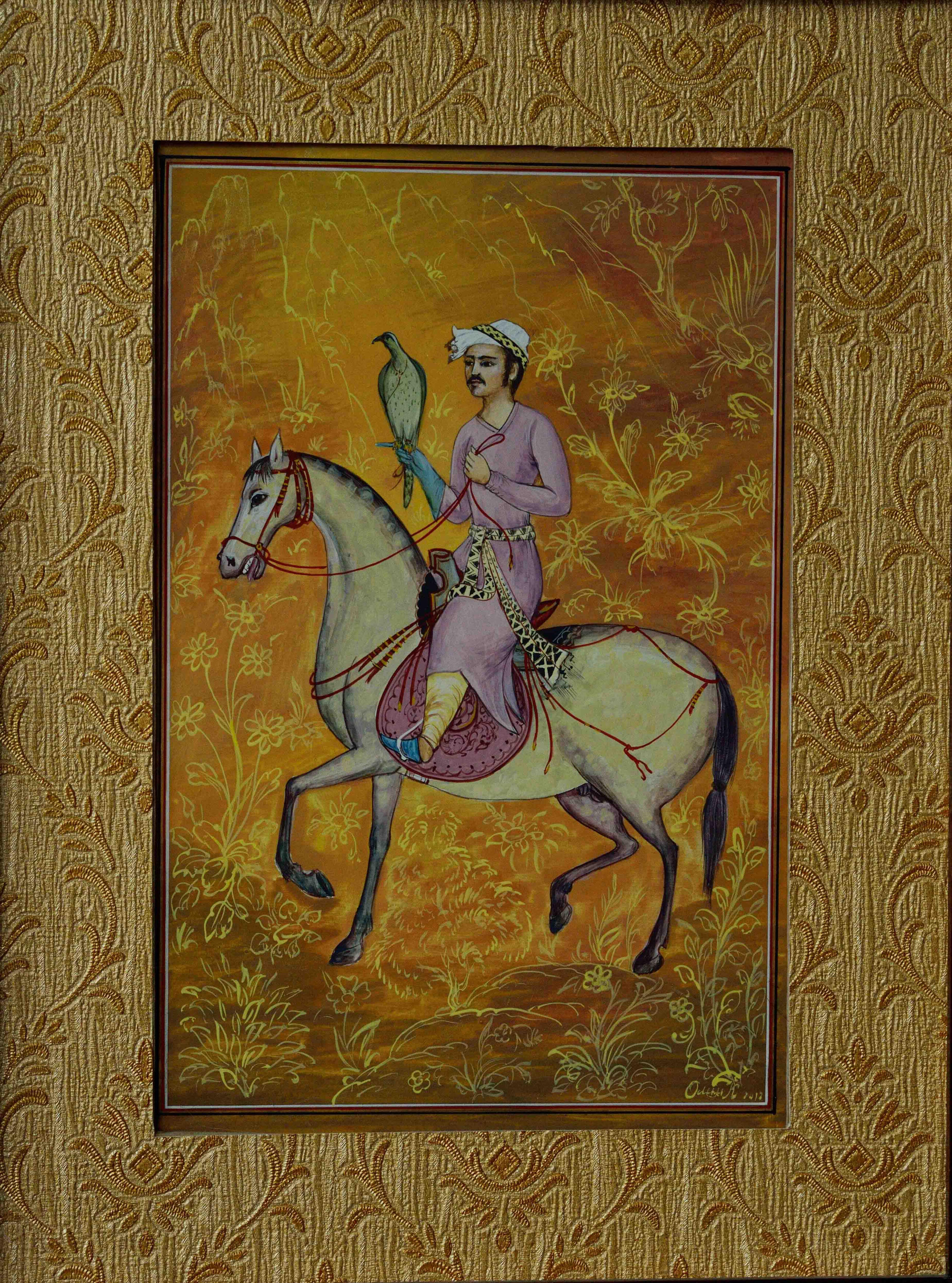
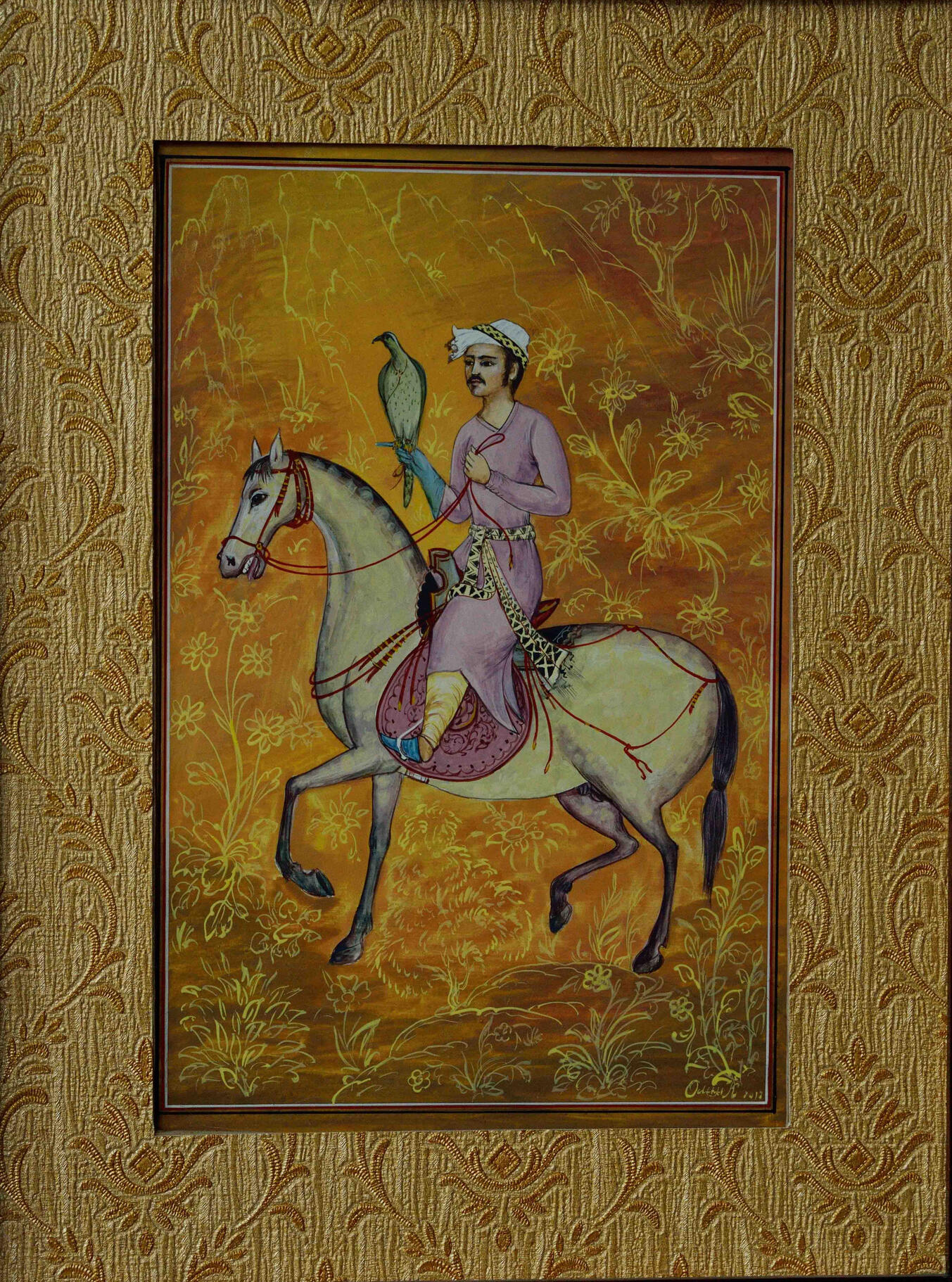
Artwork 12 - Rider and Falcon
Thin board, tempera, 30 × 40 cm, 2012
The work portrays a rider accompanied by a falcon, symbolizing the ancient tradition of falconry practiced across Central Asia and the Persian world. The composition emphasizes harmony between human, animal, and nature while highlighting the elegance of this noble art.
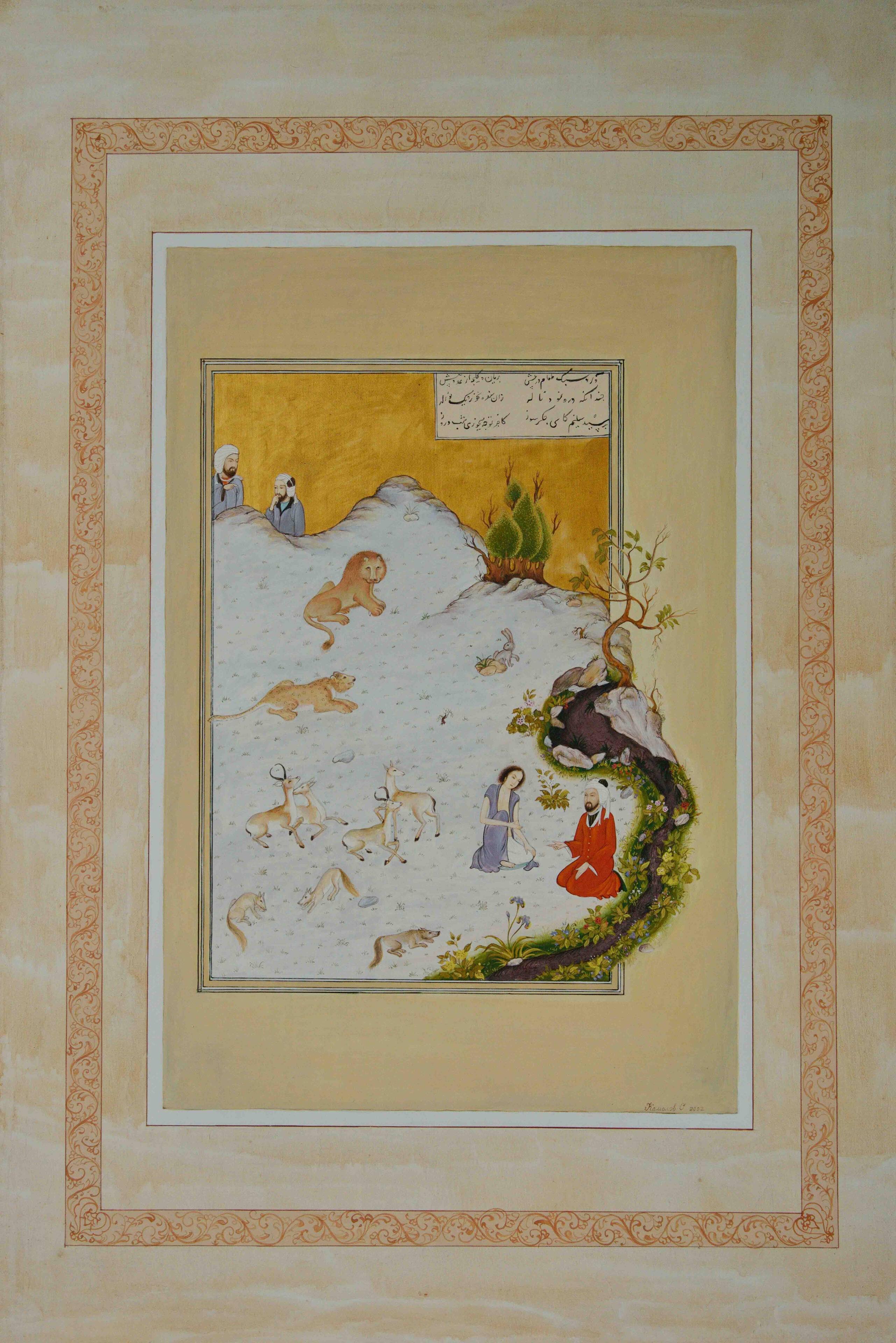
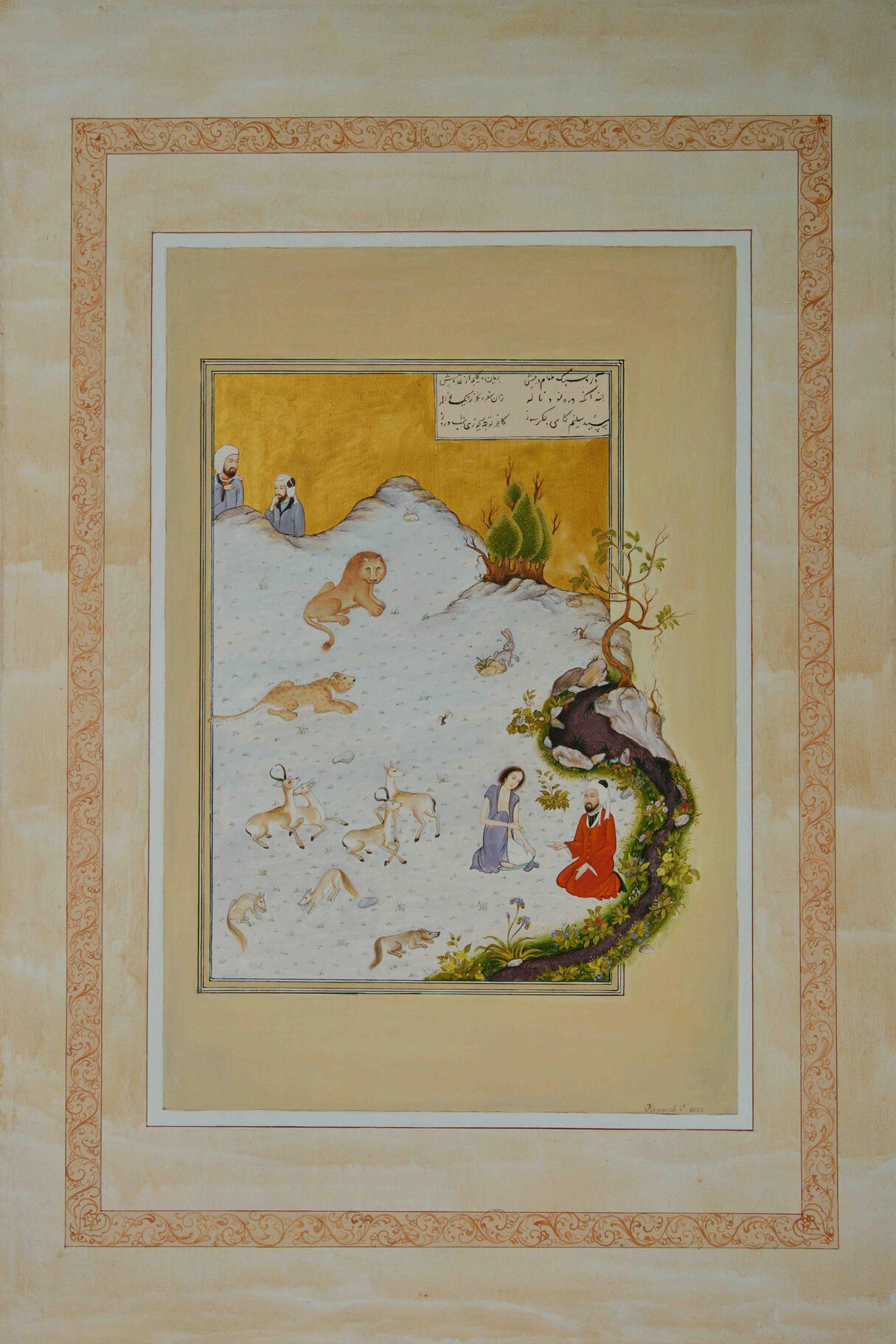
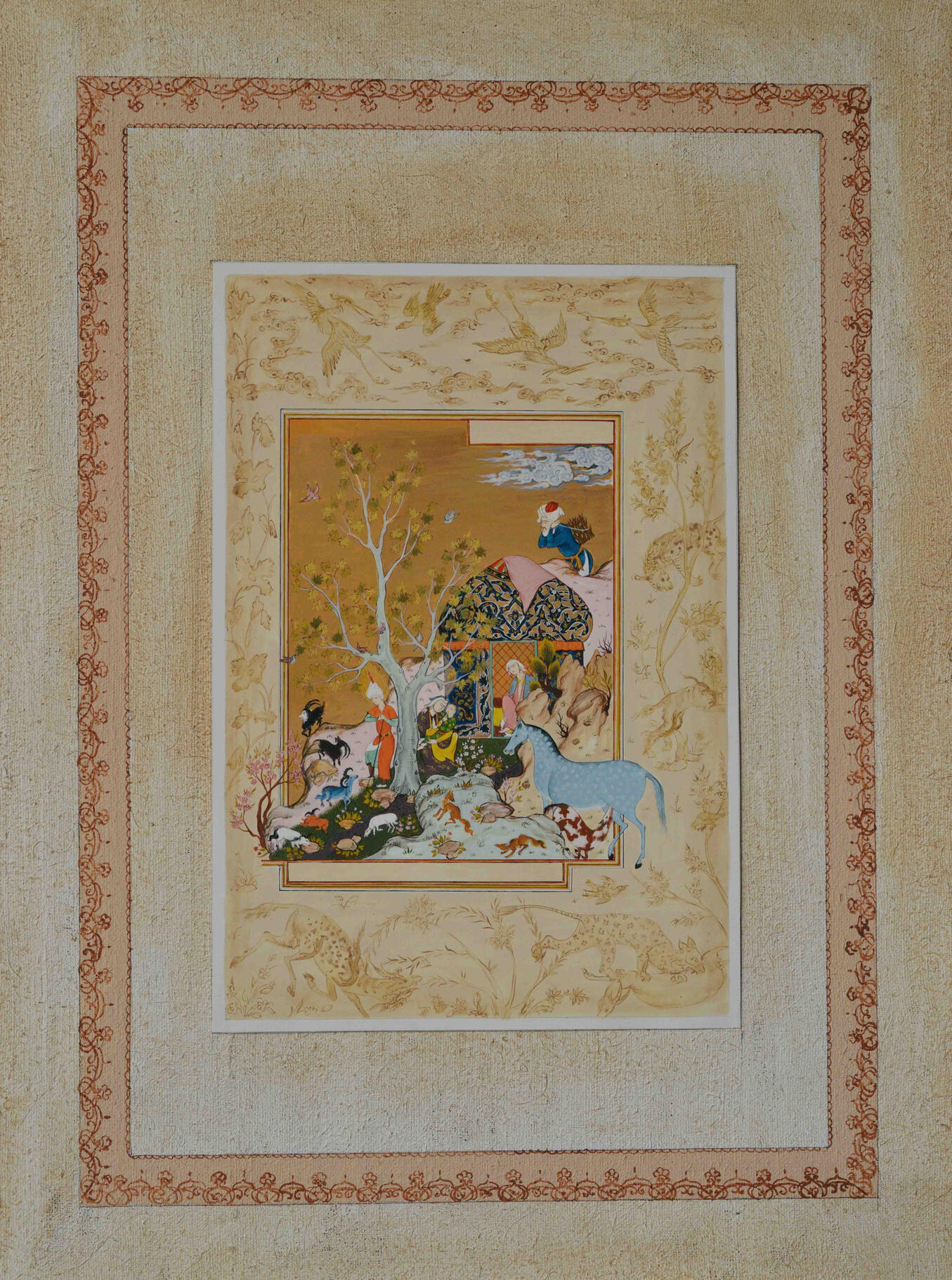
Artwork 13 - Mejnun’s Father Comes to See His Son
Canvas, tempera, 40 × 60 cm, 2002
Inspired by the legendary tale of Layla and Majnun, the painting illustrates the emotional moment when Majnun’s father seeks out his son, who has withdrawn from society because of his overwhelming love. The scene conveys themes of devotion, sorrow, and parental compassion.
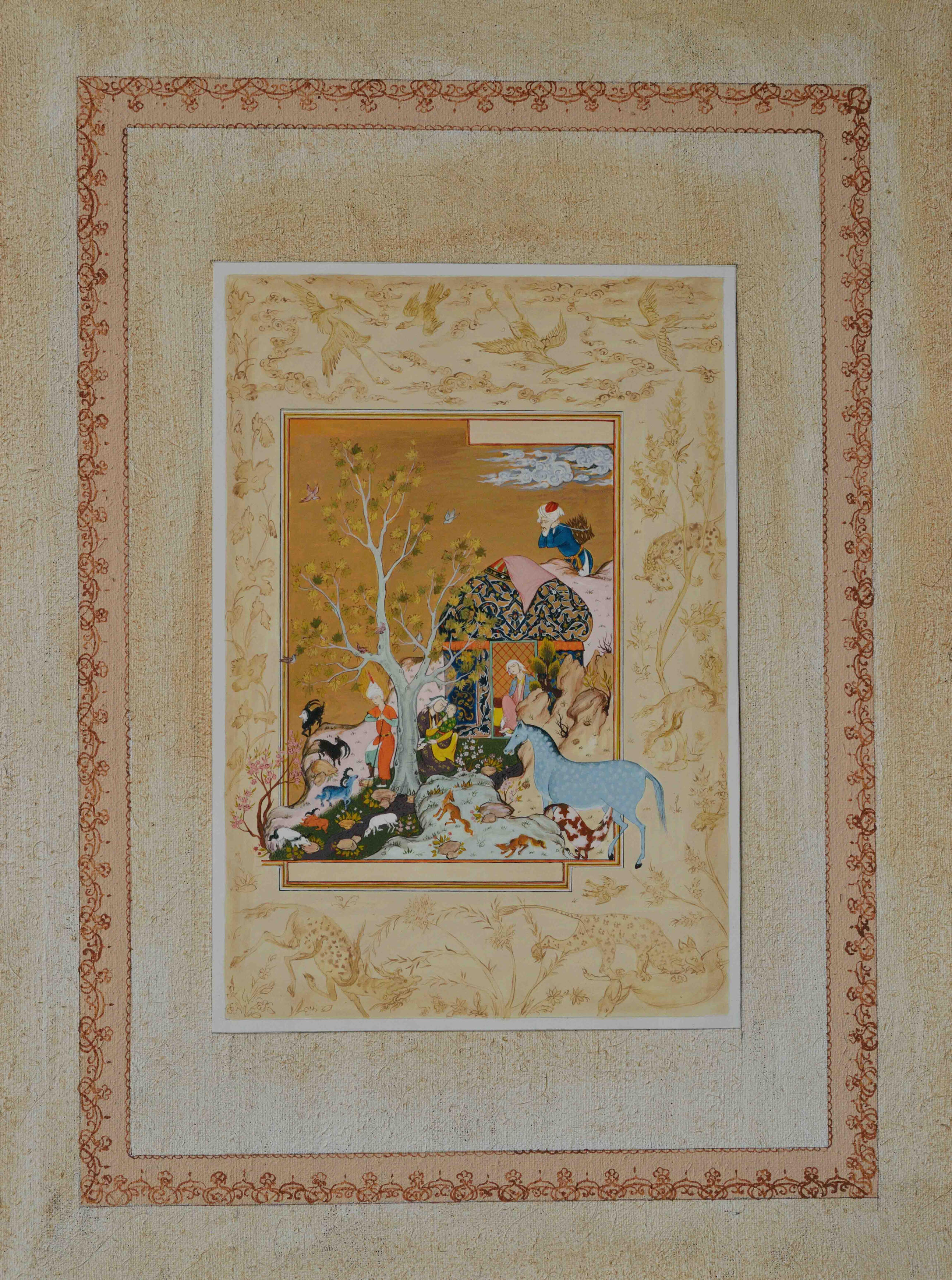
Artwork 14 - Yusuf Tends His Flocks
Canvas, tempera, 60 × 40 cm, 2005
Drawing from the story of Prophet Yusuf (Joseph), the painting presents a peaceful pastoral scene of the young shepherd among his flocks. The work reflects themes of innocence, spirituality, and the deep connection between humanity and the natural world.
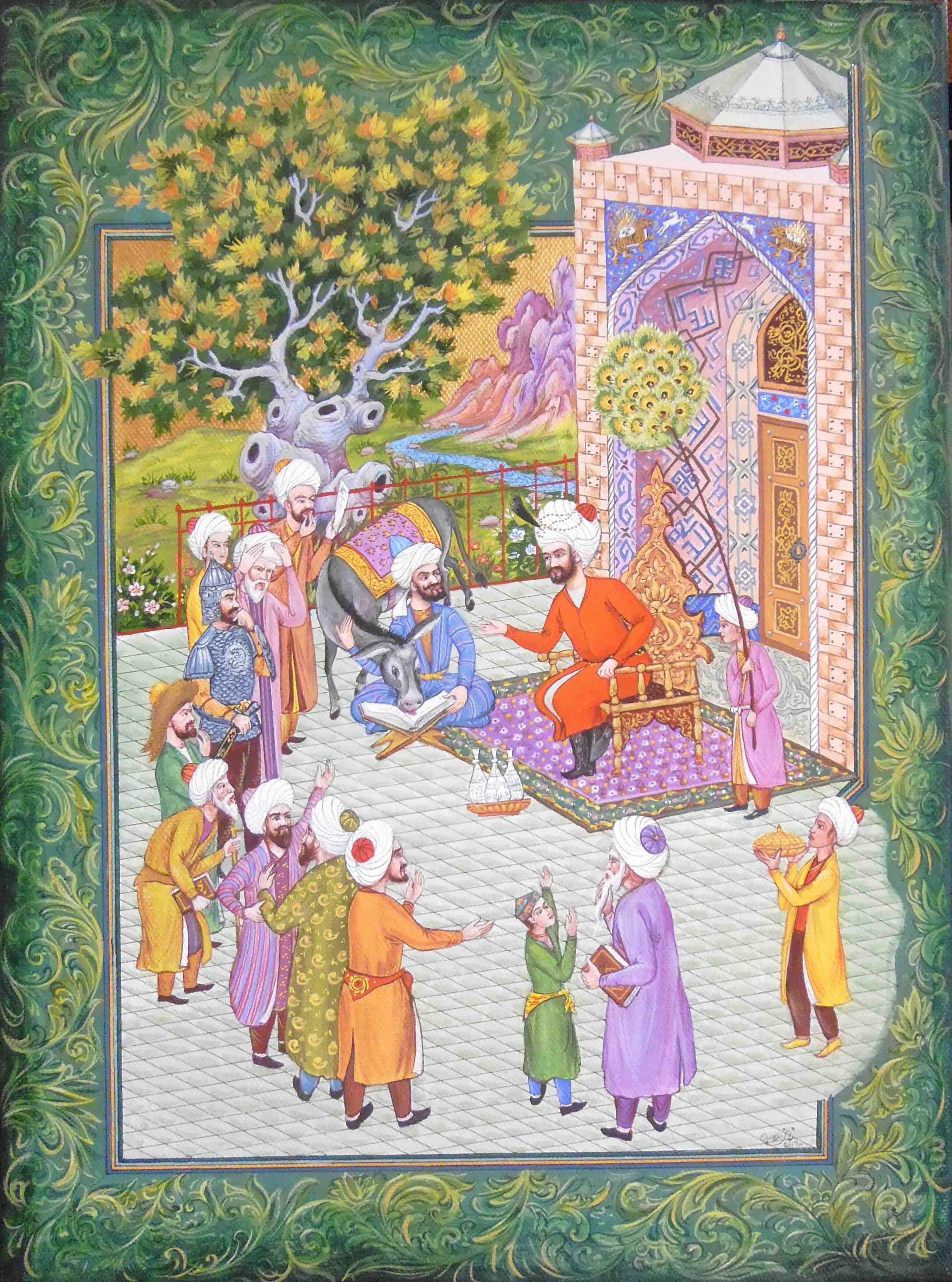
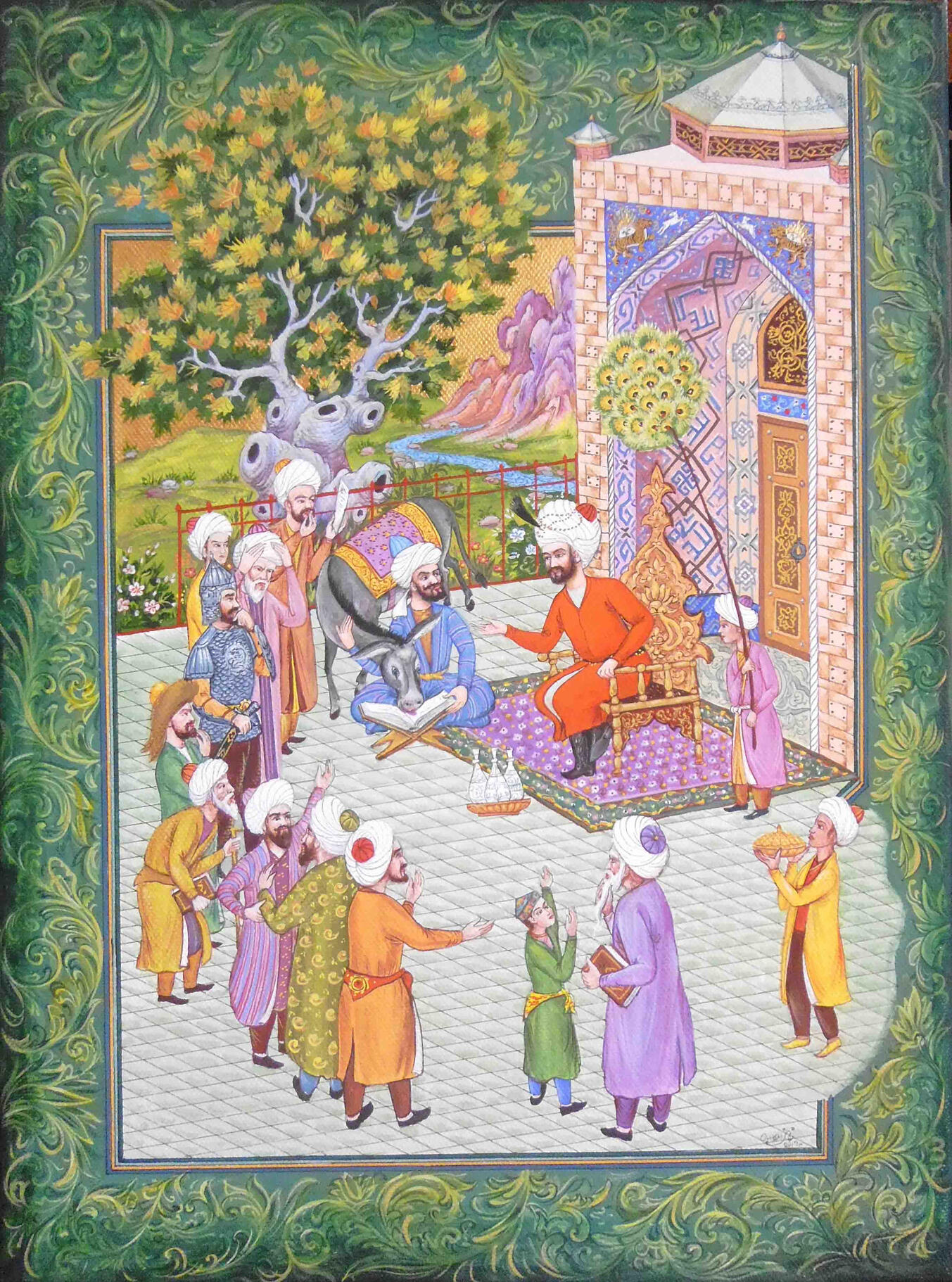
Artwork 15 - Nasreddin Hodja Teaching His Donkey Literacy
Tempera, 50 × 40 cm, 2014
With humor and wit, the artist illustrates one of the famous tales of Nasreddin Hodja. According to the legend, Hodja promises the Shah that he can teach his donkey to read. By scattering grains of oats between the pages of a book, the donkey appears to be “reading” as it searches for the grain. Amused and astonished, the Shah rewards Hodja with a bag of gold, which the clever hero later distributes among the poor.
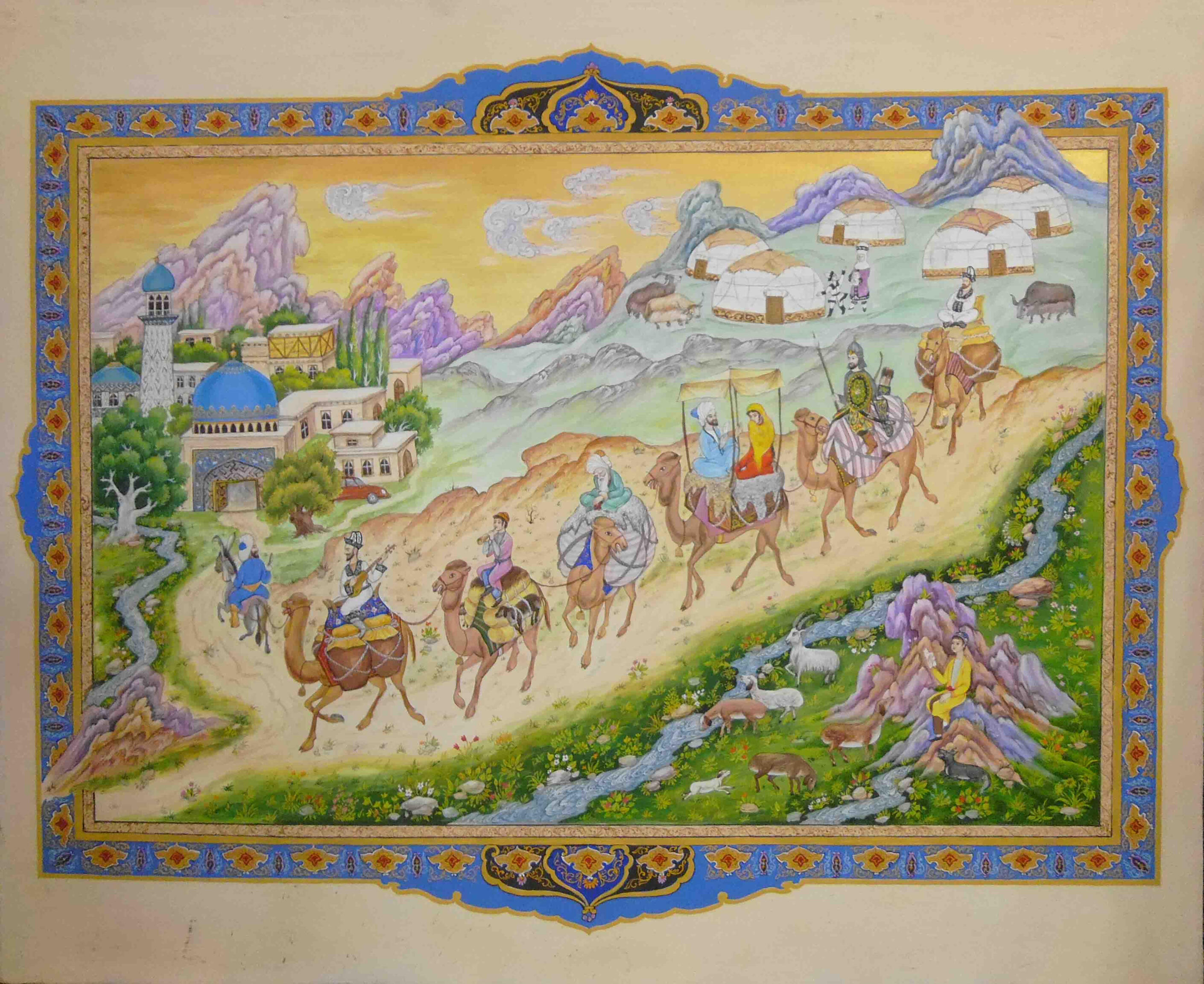
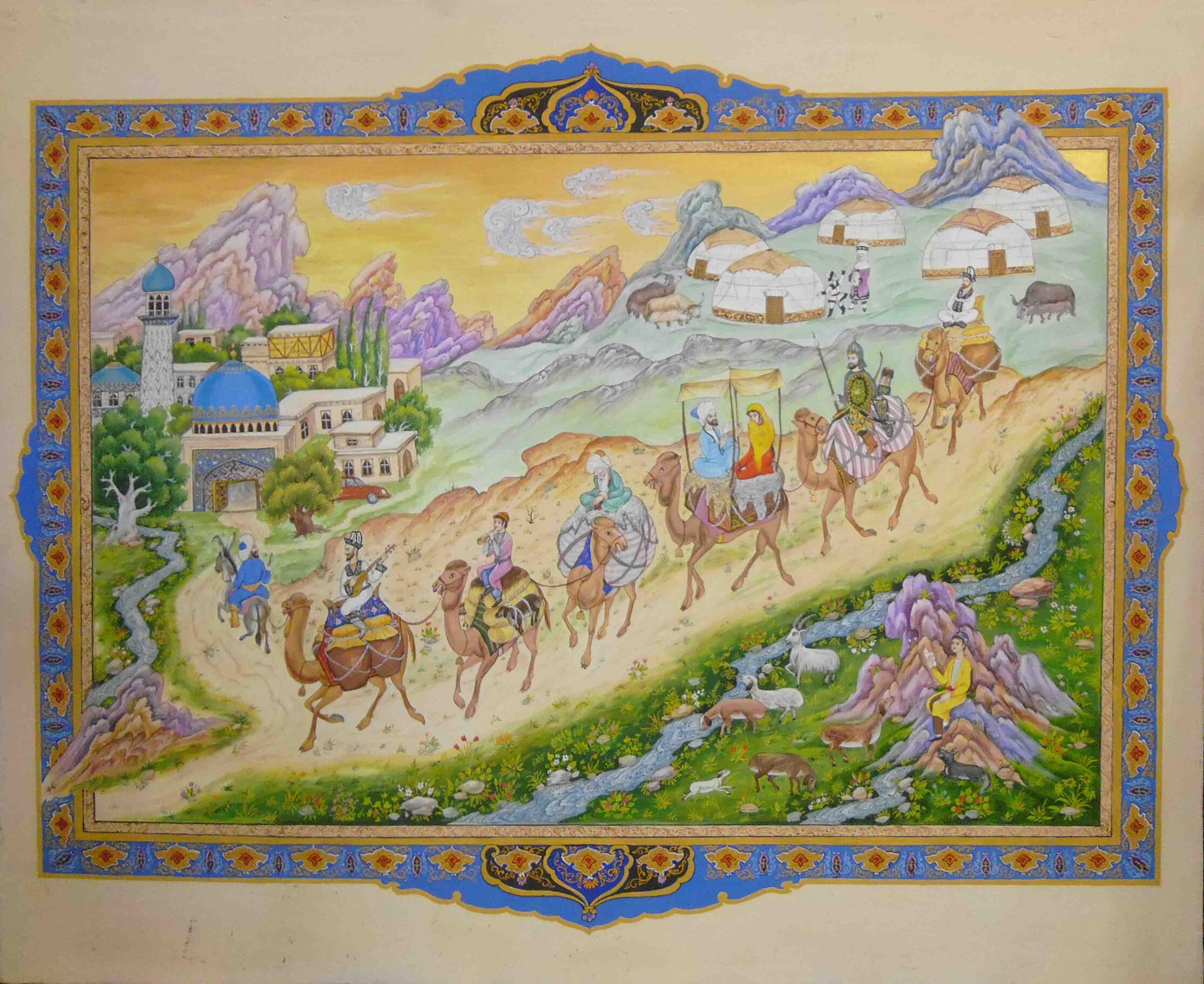
Artwork 16 - Silk Road
Tempera, 60 × 70 cm, 2015
This miniature depicts a caravan traveling along the historic Silk Road, which began in China and Kashgar and entered Persia carrying precious goods for trade. Painted during the artist’s participation in a BiaART masterclass in Bishkek (2015), the work reflects the rich cultural and commercial exchanges that defined this legendary route.
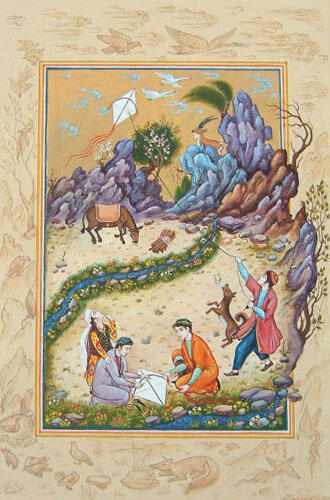
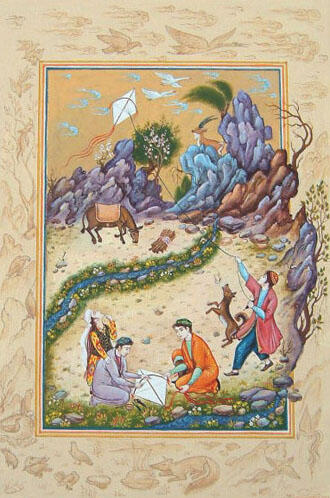
Artwork 17 - Kite Runner (“Bodbark”)
Tempera, 38 × 50 cm, 2014
In this miniature, the artist incorporates elements of contemporary Tajik life into his work. Drawing from everyday motifs of traditional Tajik society, the scene depicts a child chasing a kite, capturing both the playful energy of youth and the continuity of cultural traditions in modern life.

ART COLLECTION
by Olim Kamolzoda

1. Shepherd, tempera, 25x20cm, 2013

2. Begim, tempera, 30х20, 2012

3. Rope-Walker, canvas, tempera, 50x70cm, 2005

4. Flutist, canvas, tempera, 80х60cm, 2015

5. Playing Chess, tempera, 50х40, 2014

6. Navruz, cooking sumalak

7. Poyga, silk paper,tempera, 18 х 13cm

8. Eagles, oil, tempera, 70x90cm, 2019

9. Ramadan Celebration, tempera, watercolour, 30х40cm, 2014

10. Polo, tempera, 30x20cm, 2013

11. In Love, canvas, tempera, 30х20cm, 2004

12. Rider and Falcon, thin board, 30х40, tempera, 2012

13. Mejnun’s Father Comes to See His Son, canvas, tempera, 40x60, 2002

14. Yusuf Tends His Flocks, canvas, tempera, 60х40cm, 2005

15. Nasreddin Hodja Teaching His Donkey Literacy, tempera, 50x40, 2014

16. Silk Road, tempera, 60х70cm, 2015

17. Kite runner, tempera, 38x50cm, 2014
Text